Microcurrent in practice: 7 reasons why treatment may not be successful
This is because the crucial question is often not whether microcurrent has applied a physical stimulus. The more important question is usually why this stimulus was not visible as a clear therapeutic success or clearly perceived by the patient.
In this article, we highlight seven typical reasons for a lack of therapeutic success in microcurrent practice – and why the absence of immediate improvement does not automatically equate to a lack of effect.
1. NO IMMEDIATELY VISIBLE IMPROVEMENT DOES NOT AUTOMATICALLY MEAN ‘NO EFFECT’
In practice, it is often said very quickly: ‘Microcurrent hasn’t worked here.’
However, this statement is often too sweeping.
If a patient does not report an immediate reduction in pain following a treatment, this does not automatically mean that no relevant response has taken place. It is possible that tissue tension has changed, mobility has improved, or the patient’s tolerance to stress has increased slightly. Changes in sleep, recovery or stimulus processing can also be indications of a therapeutic response.
In microcurrent therapy in particular, it is important not to focus on just a single parameter. A treatment may have been biologically beneficial, even if the desired clinical end result is not yet fully apparent straight away.
The key question is therefore not just: Does the patient experience immediate relief from symptoms? But also: What has actually changed – locally, functionally or regulatorily?
2. THE SYMPTOM IS BEING TREATED, BUT NOT THE RELEVANT STRUCTURE
A common reason for a lack of therapeutic success lies in choosing the wrong therapeutic focus.
Patients report pain, feelings of tension or restricted movement. Whilst these symptoms indicate that a problem exists, they do not automatically reveal which tissue is causally involved.
Pain is not tissue. Tension is not tissue. Fatigue is not tissue.
Anyone wishing to work precisely with microcurrent must therefore ask themselves: Is the focus here more on the muscle? The fascial system? The tendon? The ligament? The capsule? A neural structure? Or a vegetative component?
This distinction is particularly crucial when adopting a frequency-specific approach. For only when the condition and tissue are selected as accurately as possible can the therapy realise its full potential.
A lack of therapeutic success therefore does not automatically mean that microcurrent was unsuitable. Often, it means that the relevant structure has not yet been addressed with sufficient precision.
3. CAUSE AND EFFECT ARE CONFUSED
Another typical pattern encountered in everyday clinical practice: the area where symptoms are felt is automatically interpreted as the primary site of treatment.
Yet this is not always the case.
Pain in the neck may be related to the shoulder girdle, the jaw, the diaphragm or autonomic tension patterns. Discomfort in the buttocks may appear to be localised, but may functionally be part of a larger chain. Symptoms in one region may be the result of dysfunction at another level.
If treatment is limited to where the symptom is most pronounced, the success of the therapy is sometimes limited or only short-lived.
That is why, in microcurrent therapy, the approach is: not just to ask where something is felt, but also why discomfort arises in that exact spot.
Therapeutic success often increases when not only the consequence but also the underlying cause is identified.
4. COMMUNICATION WITH THE PATIENT IS TOO VAGUE
Communication is an often underestimated factor.
Many treatments are prematurely judged to be unsuccessful because the patient does not know exactly what to look out for. If the expectation is that a therapy only ‘works’ if the pain disappears completely and immediately, many relevant changes are overlooked.
Yet a meaningful response can take many different forms: less tenderness, improved range of motion, reduced irritability, calmer post-treatment reactions, better sleep or a higher tolerance to physical exertion.
Without clear communication, the scope of observation remains too narrow.
Therapists should therefore not only treat but also guide. This includes explaining in advance which changes may be relevant over the coming hours or days. A structured follow-up discussion after treatment is equally important.
It is not uncommon for a patient to say at first: ‘It’s not actually any better.’
And on closer enquiry, it becomes apparent that the pain lasted for a shorter time, movement was more free, or everyday life was easier to cope with.
The effect must not only be achieved, but also recognised.
5. THE THERAPY GOAL IS FORMULATED TOO VAGUELY
Another common problem lies in the setting of objectives.
If a treatment session begins with the attitude: ‘Let’s see if things improve a bit’, then there is a lack of therapeutic precision.
It is better to set a clear primary goal before each session. For example:
-
Reduction in pressure sensitivity
-
Improvement in active range of motion
-
Calming an overstimulated system
-
Greater resilience in everyday life
-
Reducing tension within a defined structure
The clearer the goal, the easier it is to interpret the response.
Vague goals lead to vague assessments. And vague assessments are often interpreted negatively – even when something positive has actually happened.
Microcurrent therapy becomes particularly effective when the therapeutic goal is formulated in concrete, observable and verifiable terms.
6. THE PATIENT’S SYSTEM IS NOT YET REGULATORY-LY READY
Not every organism responds equally well to therapeutic stimuli in every situation.
Some patients arrive at the practice with high autonomic nervous system stress, chronic fatigue, sleep deprivation or a persistently elevated stress response. In such cases, whilst a physical stimulus can be applied, the clinical response initially remains diffuse, weaker or delayed.
This does not mean that nothing is happening. Rather, it means that the system is not yet optimally capable of converting the applied stimulus into a clearly recognisable improvement.
Particularly in chronic conditions, a change in regulation often becomes apparent first, with symptoms following only later. This can manifest as:
-
better sleep
-
less inner restlessness
-
greater resilience
-
fewer residual effects
-
clearer patterns of response between sessions
Therapeutic experience is particularly important here. This is because a system does not always need greater intensity or greater specificity straight away. Sometimes it first requires stabilisation, structure and a reduced stimulus load.
A lack of immediate effect can therefore also be an indication of the patient’s current state of regulation.
7. DOSAGE, SEQUENCE OR ASSESSMENT ARE NOT SUITABLE FOR THE SITUATION
Even if the tissue and the therapeutic approach are fundamentally appropriate, a treatment may fail due to its practical implementation.
Sometimes the dosage is not ideal. Sometimes the sequence is unfavourable. Sometimes the treatment is too localised, too brief or too specific too early on. And sometimes the effect is assessed too soon.
Timing is a crucial factor, particularly in microcurrent therapy. Not every meaningful reaction is immediately apparent on the treatment couch. Some effects only become visible as the day progresses, during the night or under stress.
That is why it is important not only to assess the immediate aftermath of the treatment, but also to take the following hours and days into account.
Helpful questions might include:
-
What was the reaction immediately after the treatment?
-
How did the tissue feel in the evening?
-
How was your sleep?
-
How was your stamina the next day?
-
Has the quality of movement changed?
-
Were any after-effects milder or more severe than before?
Not every course of treatment is ended too soon – but many are assessed too soon.
WHAT DOES THIS MEAN IN PRACTICE?
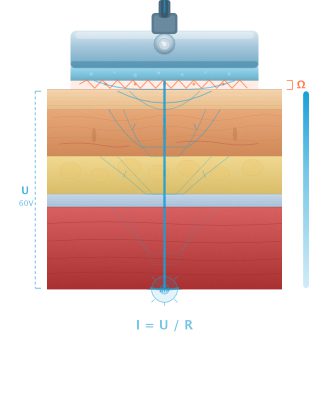
Microcurrent is a measurable physical stimulus. The real challenge in everyday therapeutic practice lies in translating this stimulus as precisely as possible into clinically relevant and verifiable therapeutic success.
This requires:
-
a thorough assessment
-
a plausible tissue hypothesis
-
a distinction between cause and effect
-
clear objectives
-
appropriate dosage and sequence
-
good communication with the patient
-
and a nuanced monitoring of progress
Those who take these points into account will not only achieve better therapeutic results, but also understand them better.
CONCLUSION: MICROCURRENT WORKS – THERAPEUTIC SUCCESS REQUIRES PRECISION
If a treatment fails to produce results, this is not automatically a verdict against the method. More often than not, it is an indication that we need to look even more closely.
Perhaps the relevant tissue had not yet been targeted. Perhaps cause and effect were confused. Perhaps communication was not precise enough. Perhaps the system was assessed too early or too narrowly.
The strength of professional microcurrent therapy therefore lies not in exaggerated promises, but in a clear therapeutic assessment.
Not just applying it, but understanding it – that is precisely where the difference lies.
RELATED: OUR PODCAST EPISODE
There is also a podcast episode on this topic:
‘Microcurrent in practice: 7 reasons for a lack of therapeutic success’