Patrick Walitschek, MSc, in an interview with Epigenetik TV (epi-genes.com)
You are currently viewing a placeholder content from YouTube. To access the actual content, click the button below. Please note that doing so will share data with third-party providers.
More InformationWhat exactly is epigenetics?
Epigenetics is a branch of genetics that deals with changes in gene expression that are not attributable to changes in the underlying DNA sequence. It investigates how environmental factors and lifestyle choices can influence the function and expression of genes.
An epigenetic trait is a permanent, regulated and often heritable change in gene function that is not based on changes to the DNA sequence. Epigenetic changes can be brought about by various mechanisms, including DNA methylation, histone modification and RNA-associated silencing mechanisms.
DNA methylation is a type of chemical modification of DNA that influences whether genes are ‘on’ or ‘off’. Histones are proteins that contribute to the structuring and compaction of DNA, and modifications to them can also influence gene expression. RNA-associated silencing mechanisms, particularly those involving so-called non-coding RNAs, can also regulate gene expression.
Epigenetic changes may, but do not necessarily, get passed on to the next generation. The role of epigenetics in many biological processes and diseases is still being investigated.
What parallels might there be between epigenetics and microcurrent therapy?
Microcurrent therapy and epigenetics are two distinct fields, but there are some interesting aspects that could be discussed when attempting to draw parallels between them.
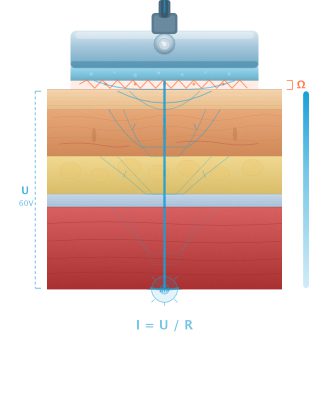
Influence on cellular processes: Both microcurrent therapy and epigenetics influence cellular processes at various levels. Microcurrent therapy, which uses very low electrical currents to stimulate healing processes and relieve pain, affects cellular energy balance and cell communication. Epigenetics influences cell function through changes in gene expression.
Response to environmental factors: Epigenetic changes can be triggered by environmental factors, including physical, chemical and biological influences. Similarly, the response of a cell or tissue to microcurrent therapy can be regarded as a reaction to an external physical stimulus.
Potential for therapeutic applications: Both epigenetics and microcurrent therapy offer interesting therapeutic possibilities. Epigenetics can help to improve our understanding of disease mechanisms and identify new treatment strategies by revealing how changes in gene expression can cause or influence diseases. Microcurrent therapy is already used for pain relief and to support tissue regeneration.
It is important to note that these parallels are largely conceptual. Although both fields operate at the cellular level, the precise mechanisms and effects differ significantly, and scientific research – particularly regarding the link between microcurrent therapy and epigenetics – is still very much ongoing.