Microcurrent therapy for shoulder pain: evidence, efficacy and clinical application
Shoulder pain is one of the most common musculoskeletal complaints seen in physiotherapy and orthopaedic practices. Whether post-operative – for example, following rotator cuff reconstruction – or due to chronic degeneration, the functional limitations and pain often lead to significant impairment in everyday life and delayed rehabilitation.
In modern physical medicine, microcurrent therapy is becoming increasingly important as a complementary, non-invasive form of treatment. Recent studies demonstrate a significant effect on pain, function and strength – whilst offering a high level of safety and very good tolerability.
✅ Microcurrent – more than just electricity
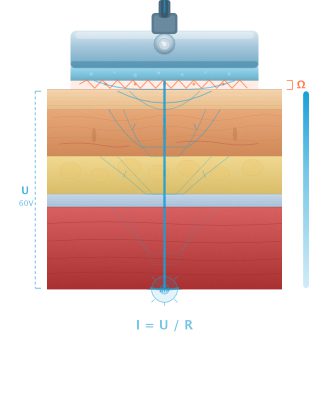
Unlike electrical stimulation techniques such as TENS or EMS, microcurrent therapy operates at extremely low current levels in the microampere range – usually below the stimulation threshold. The aim is not to induce muscle contraction, but rather to regulate cellular processes and support the tissue healing process. The focus is particularly on promoting ATP production and tissue metabolism.
🎯 Effects on pain and function – what does the research say?
Three recent studies investigated the effects of microcurrent in patients with shoulder complaints – particularly in the post-operative and chronic contexts.
1. Yi et al. (2021) – Microcurrent following rotator cuff surgery
A randomised study involving 28 patients showed:
-
Significant pain relief (VAS) as early as the first 4 weeks post-surgery
-
Significant improvement in shoulder function (SST, ROM)
-
Increased grip strength compared with the control group
👉 Particularly relevant: The treatment was administered during the sensitive early phase following surgery – that is, at a time when active movement is often not yet possible.
Source: Yi et al., 2021 – Medicina
2. Labib et al. (2023) – Comparison of laser versus microcurrent
This study compared microcurrent and GaAs laser therapy for post-operative shoulder pain. Results:
-
Both methods significantly improved pain and function
-
Microcurrent was equivalent to the laser
-
Both were superior to conventional physiotherapy
3. Iijima & Takahashi (2021) – Systematic review
This review study concludes that:
-
Microcurrent therapy shows consistent efficacy in musculoskeletal pain
-
No serious side effects reported
-
Good tolerability when used for shoulder, knee and back pain
Source: Iijima & Takahashi, 2021 – Archives of Rehabilitation Research
| Therapeutic effect | Demonstrated for shoulder pain | Research evidence |
|---|---|---|
| Pain relief | ✅ Significant | Yi et al., 2021; Labib et al., 2023; Iijima & Takahashi, 2021 |
| Improved shoulder function | ✅ Significant | Yi et al., 2021; Labib et al., 2023 |
| Increased grip strength | ✅ Significant | Yi et al., 2021 |
| Minor side effects | ✅ Very well tolerated | Iijima & Takahashi, 2021 |
🔐 Safety and side effects
A key advantage of microcurrent therapy is its high level of safety:
no serious side effects were reported in any of the studies.
The therapy can also be used in the post-operative phase or on sensitive patients without any significant risks.
🧾 Conclusion: Microcurrent – effective and clinically relevant
The available studies clearly show that
microcurrent is an effective complement to conventional physiotherapy and can be used both post-operatively and for chronic shoulder conditions.
✅ Pain reduction
✅ Functional improvement
✅ Increased
strength ✅ High safety profile
Microcurrent does not replace exercise therapy – rather, it specifically complements it during phases when active exercise is not yet possible or is only possible to a limited extent.
For doctors, physiotherapists and alternative practitioners, microcurrent offers a valuable addition to the therapeutic repertoire – scientifically sound, suitable for everyday use and patient-friendly.
📚 Sources
-
Yi, D., Lim, H., & Yim, J. (2021). Effect of Microcurrent Stimulation on Pain, Shoulder Function, and Grip Strength in the Early Post-Operative Phase following Rotator Cuff Repair. Medicina, 57. https://doi.org/10.3390/medicina57050491
-
Labib, C., Mowafy, P., Gaber, P., & Ali, A. (2023). Post-mastectomy shoulder pain and lymphoedema responses to Ga-As laser versus microcurrent electrical stimulation. Journal of Advanced Zoology. https://doi.org/10.17762/jaz.v44is7.2808
-
Iijima, H., & Takahashi, M. (2021). Microcurrent Therapy as a Therapeutic Modality for Musculoskeletal Pain: A Systematic Review. Archives of Rehabilitation Research and Clinical Translation, 3. https://doi.org/10.1016/j.arrct.2021.100145