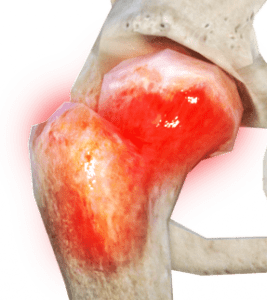
Bone marrow oedema – BMO
Bone marrow oedema (BMO), also known as bone marrow effusion, is an accumulation of fluid, tissue and cells within the bone tissue. It can be caused by various conditions such as trauma, infection and inflammation. BMO is a common symptom of arthritis and can be either painless or painful. BMO usually requires treatment with non-steroidal anti-inflammatory drugs (NSAIDs) and corticosteroids. Imaging techniques such as X-rays and magnetic resonance imaging (MRI) can be used to assess the extent of KMO. In more severe cases, surgery may be necessary.
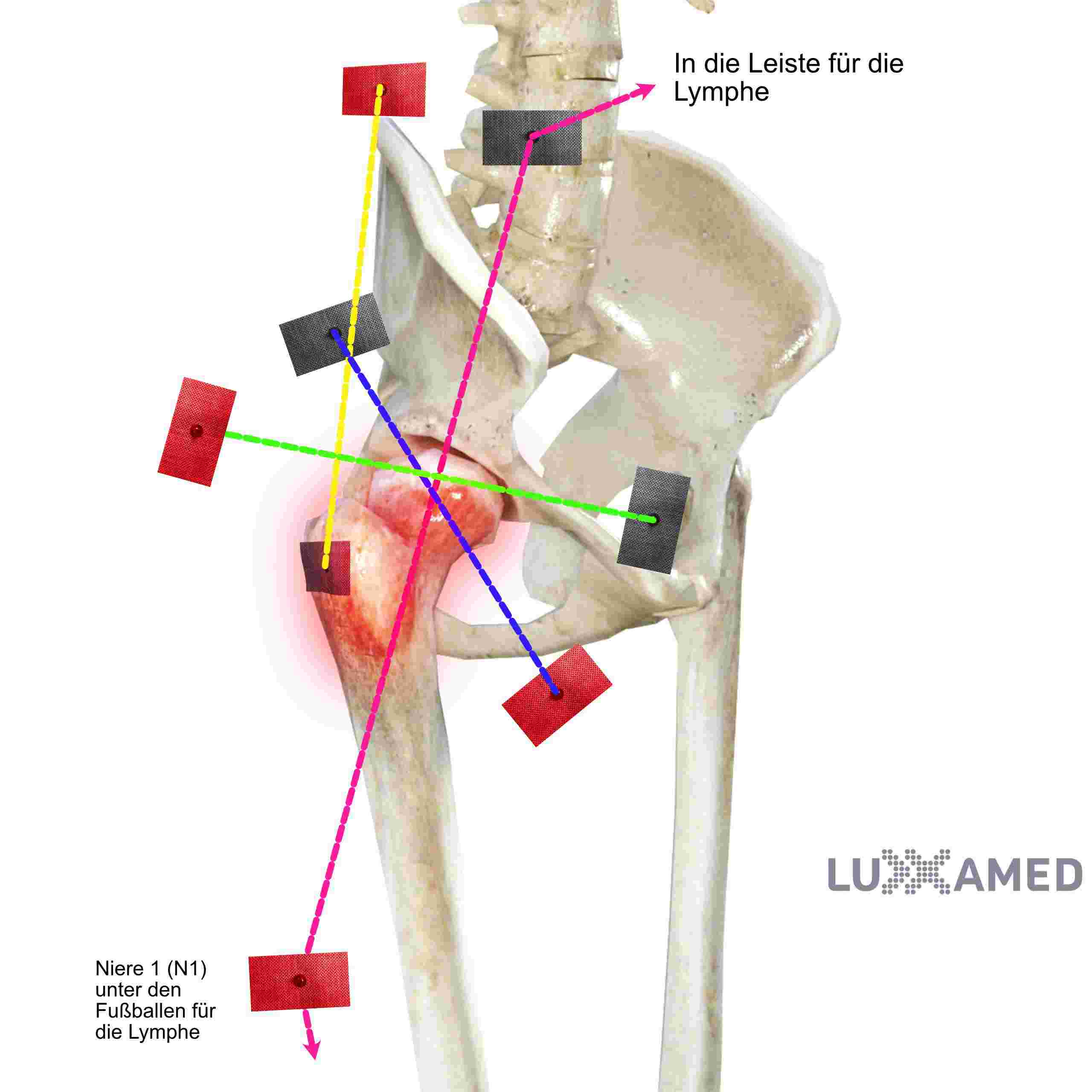
One approach to treating bone marrow oedema may involve therapy targeting tendinomuscular vessels. This involves treating the starting and ending points of the affected meridian through microvascularisation. (Ausweger & Kaltenbrunner, 2019)
Sources:
Ausweger, Ulrike; Kaltenbrunner, Heinz (2019): Tendinomuscular vessels – first-line treatment for bone marrow oedema? In: German Journal of Acupuncture, pp. 1–3. DOI: 10.1007/s42212-019-0153-0.
Voracek, Vlastimil (2012): A new therapeutic approach to orthopaedic conditions through biological stimulation of cells and tissues (BCR therapy) using metabolic-cybernetic algorithms. In: Orthopaedic and Trauma Surgery Practice 1 (9), pp. 366–367.