M. infraspinatus
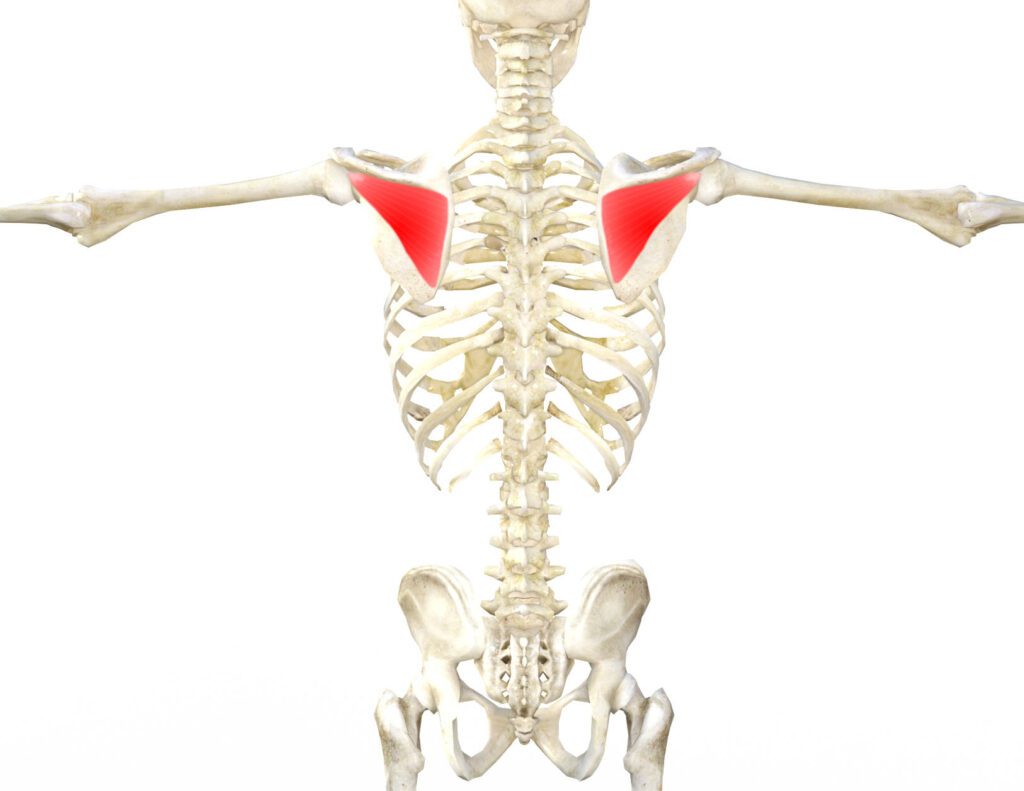
The infraspinatus muscle is part of the vertical or ‘fundamental’ muscle chain according to Godelieve Struyf-Denys (a Belgian physiotherapist and osteopath who first described muscle chains (Struyf-Denys, 1979)). The infraspinatus muscle is one of the four muscles of the shoulder’s rotator cuff. It originates from the fossa infraspinatus of the scapula and inserts onto the tuberculum majus of the humerus (upper arm bone). The main functions of this muscle are:
-
External rotation of the humerus: The infraspinatus muscle plays a key role in the external rotation of the upper arm, for example when the arm is raised.
-
Stabilisation of the shoulder joint: Like all the muscles of the rotator cuff, the infraspinatus muscle also plays an important role in stabilising the head of the humerus within the glenoid (the socket of the scapula), particularly during movements of the arm above shoulder height.
-
It may also be involved in adduction (bringing the arm towards the body) and in horizontal extension of the arm.
Myofascial trigger points
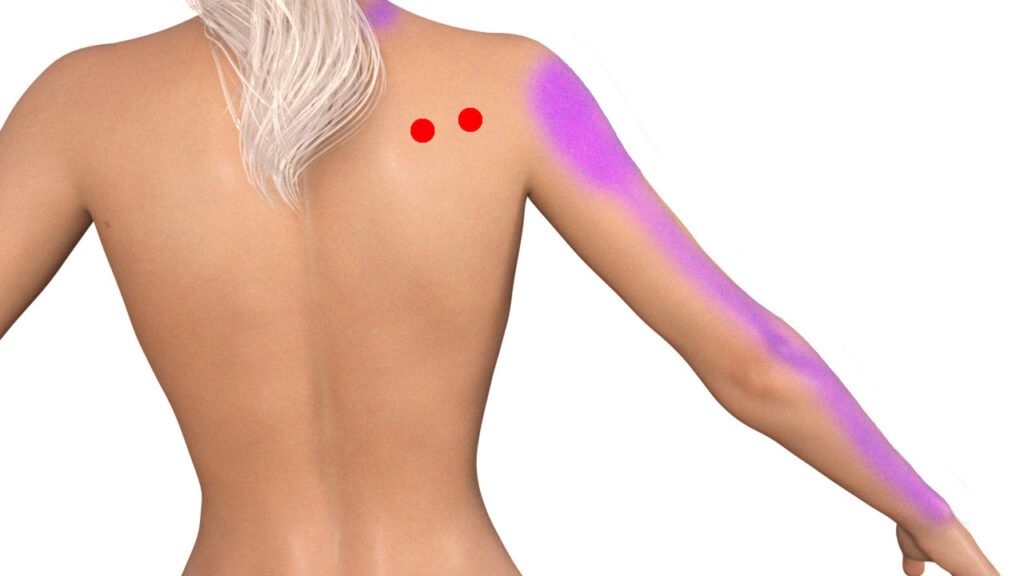
Myofascial trigger points in the infraspinatus muscle can cause pain and dysfunction in the shoulder region. These trigger points are small, palpable areas of hardening or knots in the muscle tissue, which can be painful when pressed and often radiate pain to distant parts of the body (known as referred pain). When these trigger points in the infraspinatus muscle are activated, the following symptoms may occur:
-
Pain in the front and side of the shoulder.
-
Pain radiating down the arm, particularly the upper arm.
-
Difficulty and pain when rotating the arm outwards, such as when reaching behind the back or turning a key in a lock.
-
A stabbing pain when attempting to raise the arm above head height.
In a study, Kang et al. investigated the effect of microcurrent and cryotherapy on post-operative conditions of the rotator cuff. The aim of the study was to carry out early intervention using microcurrent and cryotherapy in patients who had undergone rotator cuff reconstruction surgery, and to investigate the effects of these interventions on pain and inflammation levels by analysing C-reactive protein (CRP) as well as changes in muscle tone. (Kang et al., 2018, p. 37)
The results show that the intervention group exhibited the greatest difference in CRP levels (p<0.05). With regard to the shoulder musculature, the infraspinatus muscle showed a change in tone (p<0.05). (Kang et al., 2018, p. 39)
Sources:
Kang, Jeong-Il; Jeong, Dae-Keun; Choi, Hyun (2018): Effects of microcurrent and cryotherapy on C-reactive protein levels and muscle tone of patients with rotator cuff reconstruction. In: J Phys Ther Sci 30 (1), pp. 37–41. DOI: 10.1589/jpts.30.37.
Struyf-Denis G, Les chaines musculaires et articulaires. Paris: ICTGDS; 1979