PAIN MANAGEMENT DURING THE REHABILITATION PHASE
FOLLOWING THE IMPLANTATION OF A KNEE JOINT PROSTHESIS: EFFICACY OF BIOLOGICAL CELL REGULATION THERAPY (BCR) USING MICROCURRENT

INTRODUCTION
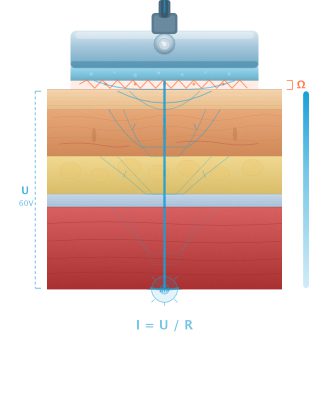
The therapeutic benefits of microcurrent therapy are well documented in the literature and are based primarily on the stimulation of physiological activity and cellular metabolism. Quantitatively speaking, the effect of microcurrent at the cellular level also affects ATP production, increased exchange processes in the intracellular and extracellular spaces, the activation of cellular metabolism and the stimulation of protein synthesis. At a therapeutic level, this process manifests itself in a reduction in pain, whether due to chronic or acute conditions, as well as in a shorter rehabilitation period. The aim of the study was to evaluate biological cell treatment (BCR therapy) using microcurrent for pain management during the rehabilitation phase in patients following knee joint replacement surgery.
MATERIALS AND METHODS
Clinical observational study with open patient recruitment. In November 2015, 30 patients from the Department of Orthopaedics were enrolled in the study; these patients had undergone knee replacement surgery and were subsequently transferred to intensive rehabilitation, where they received physiotherapy for at least 3 hours daily over a period of 2 weeks. The average age of the patients was 69/75 years (18 women, 12 men). The patients were randomly assigned to two groups. The first group (A) received standardised rehabilitation therapy comprising passive mobilisation, active exercise and gait training. The second group (B) received, in addition to the standard programme, 10 sessions of daily instrumental physiotherapy involving Biological Cell Regulation (BCR) using microcurrent, with equipment from the Clinic Master Professional range.
All patients were assessed prior to treatment using the Visual Analogue Scale (VAS) and the Knee Pain Scale (on the second post-operative day), after 10 therapy sessions and approximately 30 days after treatment.
RESULTS AND CONCLUSIONS
In Group A, pain was classified as moderate at the first assessment: VAS 5.42; Knee Pain Scale 42.85; in Group B, VAS 5.7; Knee Pain Scale 60. After ten rehabilitation sessions, the following average results were achieved: Group A – VAS 2.8; Knee Pain Scale 26.42. Group B – VAS 2.1; Knee Pain Scale 22. After approximately thirty days, the following results were available: Group A – VAS 1.9; Knee Pain Scale 20.18; Group B – VAS 1.8; Knee Pain Scale 20.11.
In conclusion, the preliminary data suggest that the use of biological cell regulation therapy (BCR) via microcurrent, in contrast to standard physiotherapy programmes, may contribute to better and earlier pain control during the rehabilitation programme following knee joint replacement surgery.
BIBLIOGRAPHY
A randomised clinical trial on the patient-centred use of BCR therapy in patients following knee replacement surgery resulted in clinically significant therapeutic effects – Bavaria Kreischa Clinic, G. Rockstroh (Dipl.Phy.), Prof. F. Krummenauer, W. Schleicher (M.D.) (2010) Determining the influence of nano-photonic technology on cellular cultures in vitro – Master of Science (M.S.) thesis – Anna Karutz, supervisor Dr Christiane Wetzel; Fraunhofer FEP 20 December 2012 Observations in neurological patients with Parkinson’s disease, multiple sclerosis, amyotrophic lateral sclerosis and restless leg syndrome during treatment with BCR therapy – Inge Metag. Keil City Hospital, 2008–2010