Microcurrent therapy for retinitis pigmentosa: applications and mechanism of action
Microcurrent therapy is a non-invasive treatment method used to slow the progression of retinitis pigmentosa (RP). By applying weak electrical currents through the cornea, the retina can be stimulated to activate neuroprotective processes and slow down vision loss.
The treatment is carried out using a CE-marked microcurrent system that has been specifically developed for home use. The Institute for Quality and Efficiency in Health Care (IQWiG) confirms that microcurrent therapy may have a neuroprotective effect and is being investigated in particular for patients with retinitis pigmentosa (IQWiG, 2015, ‘Transcorneal electrical stimulation for retinitis pigmentosa – assessment of potential’, link).

Indications for microcurrent therapy
Target group: Patients with retinitis pigmentosa (RP)
Retinitis pigmentosa (RP) is a genetically caused retinal degeneration that leads to a gradual loss of vision. Initial symptoms often include night blindness and restricted visual fields, which can worsen over time, eventually leading to complete blindness. According to a study published by SpringerMedizin, RP leads to a continuous loss of photoreceptors, which ultimately results in impaired function of the entire retina (SpringerMedizin, 2020, “Transcorneal Electrostimulation in Retinitis Pigmentosa”, link).
Microcurrent therapy is used in particular in the early to middle stages of the disease. Clinical studies suggest that it can help to:
- Slow down the loss of visual field
- To stabilise retinal function
- Maintain the activity of nerve cells in the retina
An ongoing multicentre study involving 150 patients is currently investigating the long-term effects of microcurrent therapy in RP. Preliminary results suggest that the treatment can reduce the rate of disease progression by up to 29 per cent (Eyefox, 2023, ‘New evidence of efficacy: Transcorneal electrical stimulation slows progression in retinitis pigmentosa’, link).
Other potential indications
In addition to RP, there is evidence to suggest that microcurrent therapy may also have neuroprotective effects in other retinal conditions, including:
- Stargardt’s disease (juvenile macular dystrophy)
- Diabetic retinopathy
- Glaucoma-related retinal damage
Initial clinical studies suggest that microcurrent therapy may stabilise the cellular function of the retina in these conditions (SpringerMedizin, 2014, ‘Transcorneal electrostimulation in Stargardt’s disease’, link).
Mechanism of action of microcurrent therapy
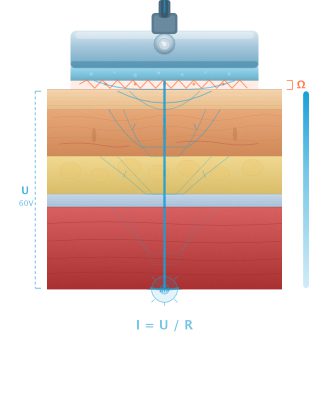
Microcurrent therapy stimulates retinal neurons using weak electrical currents in the microampere range. The currents, applied via a corneal electrode, pass through the cornea and activate photoreceptors, bipolar cells and ganglion cells.
According to a study by Okuvision, a company that is further developing microcurrent therapy for clinical use, the application of this method can activate various cellular mechanisms:
-
Increased neurotrophic factors
- In particular, there is an increased release of Brain-Derived Neurotrophic Factor (BDNF), which protects nerve cells and prevents apoptosis (Okuvision, 2024, “OkuStim® Therapy – Changing the Course”, PDF link).
-
Improved mitochondrial function
-
Activation of voltage-gated calcium channels
- The microcurrent pulses stimulate calcium channels, which can improve cellular communication and signal transmission in the retina (Okuvision, 2024, “OkuStim® Therapy – Changing the Course”, PDF link).
Safety aspects and tolerability
Microcurrent therapy is considered safe and well tolerated. The CE-marked microcurrent system features several safety mechanisms, including:
- Temperature sensors that prevent the eye from overheating
- Leakage current monitoring to prevent unintended electrical currents
- Sterile, single-use electrodes to reduce the risk of infection
According to a study by SpringerMedizin, side effects occur only rarely. Occasionally, mild eye irritation or brief flashes of light (phosphene) may occur during treatment (SpringerMedizin, 2020, “Transcorneal Electrical Stimulation for Retinitis Pigmentosa”, link).
Conclusion
Microcurrent therapy represents a promising treatment method for slowing the progression of retinitis pigmentosa. Clinical studies show that regular use can have positive effects on retinal function, the visual field and visual quality.
Thanks to its non-invasive nature and good tolerability, it offers a viable option for patients with RP who wish to actively influence the course of their condition. The final evaluation of the method in everyday clinical practice is being further investigated through ongoing studies and could establish microcurrent therapy as an integral part of RP treatment.