Frequency-specific microcurrent in combination with pulse diagnosis
A review of the years 2009 to 2011
Introduction
The integration of microcurrent therapy and LED light therapy into clinical practice offers a holistic therapeutic approach based on the application of weak electrical currents and specific light wavelengths to support healing processes and alleviate pain. The use of these methods is underpinned by sound scientific evidence and studies demonstrating their effectiveness in various clinical scenarios.
microcurrent therapy
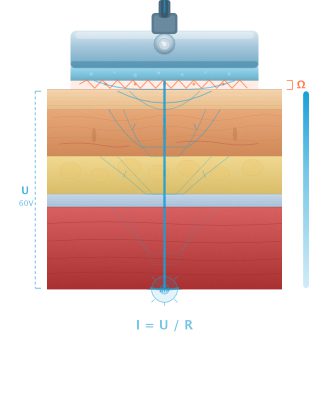
Microcurrent therapy uses currents in the microampere range to stimulate the body’s natural healing processes. This form of electrotherapy has proven effective in the treatment of pain conditions, in promoting wound healing and in the treatment of neuropathic pain. Frequency-specific microcurrent therapy (FSM) goes one step further by using specific frequencies to treat particular tissues and pathological conditions, based on a comprehensive list of frequencies developed for various conditions and tissue types (McMakin, 2018).
LED light therapy
LED light therapy works by emitting light within specific wavelength ranges, with each colour having specific biological effects. Studies have shown that red light promotes cell activity and ATP production, whilst blue light has anti-inflammatory properties and can reduce the production of pro-inflammatory cytokines. Green light has been associated with positive effects on wound healing and collagen production, which justifies its use in dermatological therapy and wound treatment (Fraunhofer Institute, Dresden; Catao et al., 2015; Nonaka et al., 2014).
FSM with the Clinic-Master Professional
Between 2007 and 2010, FSM (frequency-specific microcurrent therapy) was taught in various courses. Dr Wolfgang Bauermeister learnt the method from the founder of FSM, Dr Caroly McMakin, and passed on his knowledge to German microcurrent practitioners.
The medical microcurrent devices, the Clinic-Master professional and Vital-Master, could be programmed using special chip cards previously created by Dr Bauermeister so that the channels could be assigned state and tissue frequencies in accordance with the FSM guidelines as set out by Dr McMakin. The frequency range of the devices was between 0.1 Hz and 999 Hz: on four channels for the Clinic-Master and on two channels for the Vital-Master.
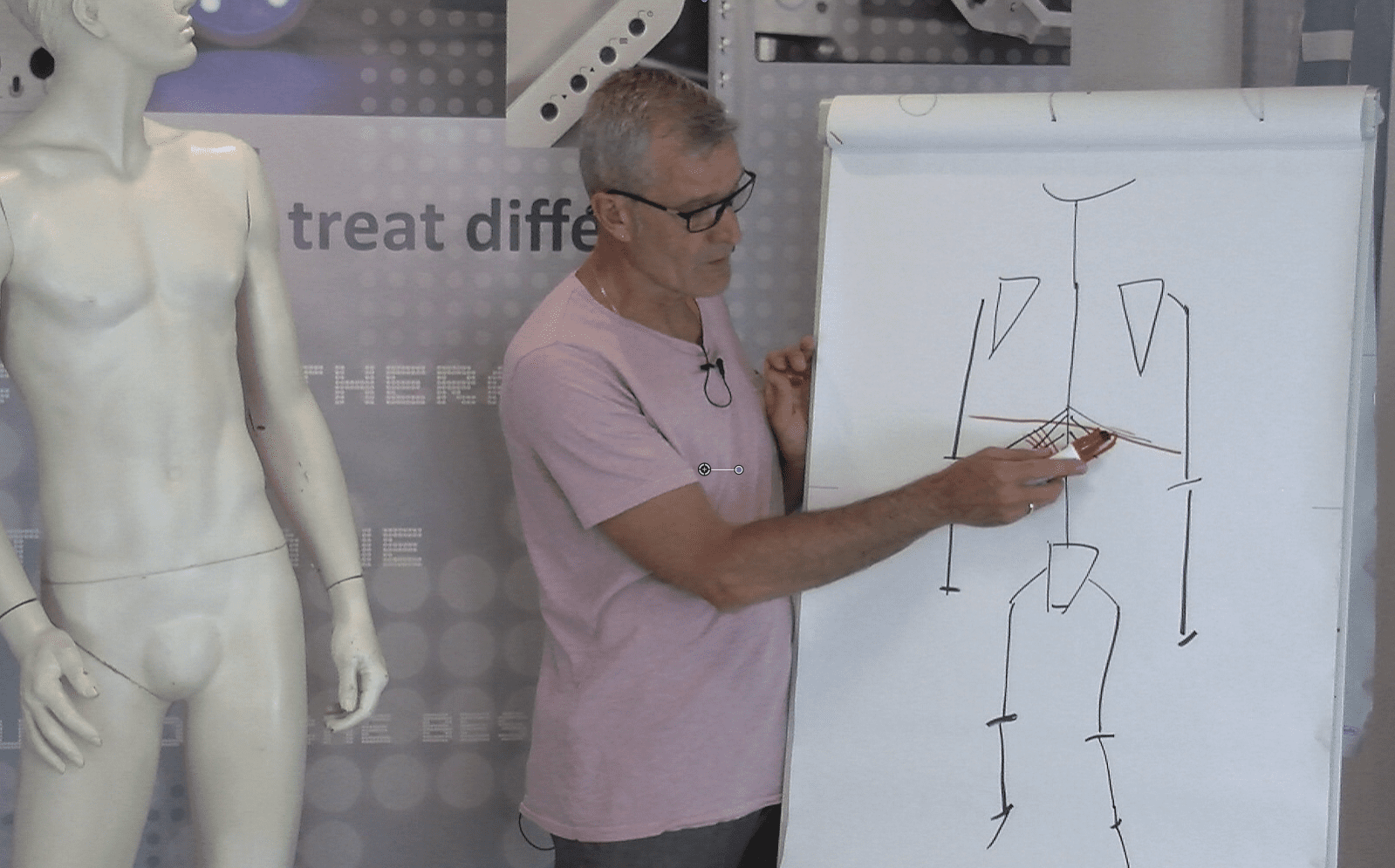
As part of the medical application of these frequency-specific microcurrents, Dr Bauermeister utilised a method of pulse diagnosis.
You are currently viewing a placeholder content from YouTube. To access the actual content, click the button below. Please note that doing so will share data with third-party providers.
More InformationThe concept of pulse diagnosis in combination with microcurrent therapy, particularly in the context of frequency-specific microcurrent therapy (FSM) as developed by Dr Carolyn McMakin, offers a fascinating interface between traditional diagnostic methods and modern electromedical treatment. FSM therapy uses specific frequencies to treat particular tissues and medical conditions, with each frequency targeting specific causes and manifestations of pain. By observing the body’s response to these frequencies, particularly changes in the pulse, the therapist can assess and adjust the effectiveness of the treatment in real time.
Fundamentals of pulse diagnosis
In traditional medicine, including Chinese medicine, pulse diagnosis is an established method for obtaining information about a patient’s state of health. The pulse provides information about the vitality and balance of the energy pathways in the body. Changes in pulse quality – such as rate, rhythm and strength – can indicate specific imbalances or disorders within the body.
Integration into microcurrent therapy
When applying FSM microcurrent therapy, pulse diagnosis can serve as direct feedback to assess the effectiveness of the applied frequencies. If a patient’s pulse changes towards a more balanced and healthier state, this may indicate that the selected frequencies are appropriate and effective. Conversely, an unchanged or negatively altered pulse may indicate that an adjustment to the frequencies is required.
Practical application
Preparation: Before commencing FSM therapy, the patient’s resting pulse is measured to establish a baseline.
Frequency application: Whilst the FSM frequencies are being applied, the therapist continuously monitors the patient’s pulse.
Assessment of the response: Any significant change in the pulse (faster, slower, stronger, weaker) is assessed in the context of the specific frequency and the condition being treated.
Adjustment: Based on the pulse response, the frequencies can be adjusted to optimise the therapy and achieve the best possible resonance within the patient’s body.
Advantages of the combined method
Individualised treatment: Enables personalised therapy tailored to the patient’s specific needs and responses.
Immediate feedback: Provides the therapist with immediate feedback on the effectiveness of the treatment and allows for rapid adjustment.
Holistic approach: Combines modern electromedical techniques with traditional diagnostic methods to form a comprehensive treatment strategy.
Conclusion
The integration of pulse diagnosis into FSM microcurrent therapy opens up new avenues for dynamic and individualised treatment. The method emphasises the importance of direct feedback from the body and helps therapists identify the most effective frequencies for successful treatment. By combining traditional and modern approaches, therapists can aim for a deeper level of healing based on both empirical data and the patient’s energetic states.
Examining pulse diagnosis in the context of medical applications
Sources
Role of pulse diagnosis: A review Ramandeep Kaur, Manu Chopra, N. Garg, H. Ryait 10.1109/CCAA.2015.7148391 https://doi.org/10.1109/CCAA.2015.7148391 International Conference on Computing, Communication and Automation 9 2015 Modern scientific approaches are being used to resolve the problem of standardisation and quantification in pulse diagnosis.
Pulse wave velocity and its diagnostic value in cardiovascular diseases. Literature review and results of our own observations N. Zolotaryova, I. Gunenko, D. G. Paraskiva 10.30978/utj2021-3-81 https://doi.org/10.30978/utj2021-3-81 Ukrainian Therapeutic Journal 0 2021 The measurement of pulse wave velocity is one of the main investigative methods for assessing arterial properties.
Pulse wave analysis for the diagnosis of cardiovascular disease J. Xia, Simon Meng Liao 10.4103/digm.digm_2_18 https://doi.org/10.4103/digm.digm_2_18–6 2018 Pulse wave analysis is used to study cardiovascular diseases, yielding some important findings.
A preliminary study on the analysis of pulse diagnosis Lian-Yi Chen, H. Atsumi, M. Yagihashi, F. Mizuno, H. Narita, H. Fujimoto 10.1109/ICCME.2007.4382059 https://doi.org/10.1109/ICCME.2007.4382059 CME 9 2007 Pulse diagnosis is a technique that relies largely on the subjective judgements of individual practitioners, without a clear standard.
An objective review of technological developments for radial pulse diagnosis in Traditional Chinese Medicine Rosemarie Velik, Rosemarie Velik 10.1016/J.EUJIM.2015.06.006 https://doi.org/10.1016/J.EUJIM.2015.06.006 – 32 2015 Pulse palpation is an important diagnostic tool in Traditional Chinese Medicine and related systems of Oriental medicine.
Development of pulse diagnostic devices in Korea Hyunho Kim, Jong Yeol Kim, Young-Jae Park, Young-Bae Park 10.1016/j.imr.2013.01.003 https://doi.org/10.1016/j.imr.2013.01.003 Integrative Medicine Research 23 2013 Electromechanical pulse diagnostic devices have been developed to objectify and quantify pulse diagnoses for over 40 years.
Reliability of Manual Pulse Diagnosis Methods in Traditional East Asian Medicine: A Systematic Narrative Literature Review. Karen Bilton, C. Zaslawski 10.1089/acm.2016.0056 https://doi.org/10.1089/acm.2016.0056 Journal of Alternative and Complementary Medicine 11 2016 The absence of intra-rater results may raise methodological concerns for clinical practice studies.
Data analysis of expert systems using pulse diagnosis M. Grif, Yumchmaa Ayush 10.1109/IFOST.2016.7884119 https://doi.org/10.1109/IFOST.2016.7884119 International Forum on Strategic Technology 3 2016 Medical diagnosis is based on the pathophysiological process, which is not very common compared to other approaches described by various disease symptoms.
McMakin, C. (2018). Frequency-specific microcurrent therapy in pain management. [Seminarunterlagen].
Fraunhofer Institute, Dresden. Research on the efficacy of LED light therapy.
Catao, M. H. C., et al. (2015). The effect of green LED light on wound healing. Federal University of Campina Grande, PB, Brazil.
Nonaka, P. N., et al. (2014). Comparison of the effects of laser and LED light on collagen production. [Studie].