Mitochondrial medicine and microcurrent
Orthomolecular medicine in combination with microcurrent therapy
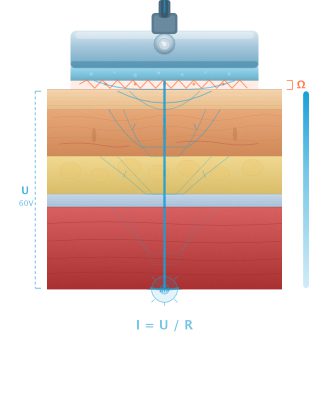
Microcurrent therapy is said to have a positive effect on metabolic processes. These include, for example, ATP production, membrane transport and protein synthesis (see Cheng et al., 1982). Recent cell biology studies by German companies have shown that microcurrent is indeed capable of reaching cells and influencing them (see Schönfelder et al., 2017).
The use of orthomolecular medicine, such as high-quality dietary supplements, is part of everyday practice in many medical and naturopathic practices in Germany. Substances such as NADH or CoQ10 are essential for the formation of high-energy phosphates. Therefore, combining microcurrent therapy with carefully selected orthomolecular preparations may also be an interesting approach. It is clear that these two methods can complement one another.
We spoke to Alexander Martens from Natugena, the developer and manufacturer of orthomolecular preparations. Through collaboration with scientific experts, such as Prof. Dr König (one of, if not the most renowned researcher in the field of mitochondria), Natugena develops highly effective products backed by scientific evidence.
Links to this episode
Sources:
CHENG, N., van HOOF, H., BOCKX, E., HOOGMARTENS, M. J., MULIER, J. C., DIJCKER, F. J. de, SANSEN, W. M. & LOECKER, W. de (1982). The Effects of Electric Currents on ATP Generation, Protein Synthesis, and Membrane Transport in Rat Skin. Clinical Orthopaedics and Related Research, &NA;(171), 264–272. https://doi.org/10.1097/00003086-198211000-00045
Schönfelder, J., Walker, S. & Kenner, L. (2017). Effect of a new generation of devices on in vitro cell cultures: AP 3: Effect of microcurrent therapy on in vitro cell cultures.

Transcript: Orthomolecular Medicine – Microcurrent
00:00:02
Alexander Martens: And I found this quite amusing: the laboratory actually rang this doctor and said, ‘Tell me, what on earth are you doing there?’ Because every day new things come to light that are so fascinating – the things that science offers us every day. Well, ZellEnergie was developed by Professor Brigitte König and, as mentioned at the start, she has published a great many papers on mitochondria. Because only when a water-soluble modification is added on top can it be transported out of the cell. LuXXaMed, for example, uses microcurrent, which can of course be optimally absorbed by the cell, utilised intracellularly and then used to achieve the best possible results.
00:00:39
Patrick Walitschek: Here we are again with a new instalment, a new episode from LuXXaMed GmbH on the topic of frequency-specific microcurrent. In this episode, I spoke with Alexander Martens, the managing director of NatuGena. After all, we all know that microcurrent therapy exerts its primary effect – or rather, its scope of action – on the metabolism. And what do we naturally need for a functioning metabolism – one that regenerates and expands effectively? We need the right building blocks; we need, so to speak, aids to speed the whole process up even further. And what are these building blocks, what are these aids? They are, of course, trace elements, vitamins, minerals and various other aids. And NatuGena specialises in the development and manufacture of precisely such orthomolecular medicine preparations and dietary supplements. I spoke to Alexander Martens about this to take a look behind the scenes at how the production, development and research surrounding dietary supplements actually work, what makes his products special, how they can be combined with microcurrent therapy, and where this approach would be most beneficial. This podcast is actually packed with a wealth of information and a great deal of expertise. And yet the conversation was absolutely fascinating. I found it really enjoyable, and Alexander Martens explained everything very clearly. So I really enjoyed working on this and simply building up my knowledge on the subject. With that in mind, I’ll just say for now: enjoy this episode, and as usual, we’ll catch up again at the end of the interview.
00:02:43
Patrick Walitschek: I’d like to extend a very warm welcome to Alexander Martens from NatuGena for our new episode today. I’m really delighted, Alex, that we’ve managed to make this happen. We’d tried to organise this a few times before, but our schedules just didn’t quite line up. So let me say: a very warm welcome! And I’m delighted.
00:03:09
Alexander Martens: Thank you, I’m also delighted to have been invited!
00:03:11
Patrick Walitschek: Yes, we’ve been working together for quite some time now; before the pandemic, we even ran seminars together, with each of us taking part in the other’s sessions. And that’s when I thought to myself: ‘It just fits together so brilliantly.’ The topic of microcurrent and LED light therapy, along with truly professional and targeted nutritional supplements for patients – and, of course, for those using this form of therapy. And with microcurrent therapy, we’re working on the metabolism, as is well known. There are various studies on this; we’ve carried out some research and cell biology studies ourselves in collaboration with the Fraunhofer Institute, specifically on the topic of LED light. And as I always like to say: microcurrent, to put it very simply, stimulates something, sets something in motion; it gets things going, but naturally it needs good building materials and building blocks to then kick-start tissue healing and so on. And, of course, the topic of detoxification is a very, very big issue – a societal one, I believe. And in that context, I thought it would be absolutely perfect for the two of us to have a chat as part of a podcast episode like this. So I’d say: why don’t you just introduce yourself and explain what your company is all about? What do you do? Where are you based?
00:04:31
Alexander Martens: I’d be happy to. First of all, thank you very much for the invitation. We manufacture dietary supplements. The dietary supplements we produce are largely formulated in collaboration with our scientific advisory board. If you take a look at our website, you’ll find a small selection. I like to give this example: Professor Spitz is well known – our Vitamin D guru. Uwe Gröber is known as a guru in the field of pharmacy, which means he specialises in drug interactions, and that’s of course a really fascinating topic: applying orthomolecular medicine in practice. The patients who come to us are usually also taking medication. That’s why it’s so important to know: which micronutrient can help us either enhance the effect of this medication or even replace it? That’s why it’s so important to work in this field. Of course, we also have Professor König on our team. Professor König is, after all, the author of the most publications on mitochondria. And this topic of mitochondria must be viewed holistically, because mitochondria are present in every cell and they provide us with energy; they give us strength and the power we need for everyday life. They ensure that we can utilise and absorb micronutrients more effectively, and so on. That’s just a small glimpse. For example, we also have Dr Freese at our institute, who provides a great deal of support when it comes to orthomolecular nutrition and detoxification, for instance. And that’s essentially how our products come about. They are products that are genuinely developed in collaboration with our scientific advisory boards. Of course, we also have many professors working at universities who carry out analyses and, above all, review a great many clinical studies. Studies are, of course, the building blocks for our products for the simple reason that: It’s no use to us if we say, for example, that turmeric helps with inflammation, and then we simply add 200 milligrams of turmeric powder. But when we look at the evidence from the studies, we simply realise: “Yes, it does have an effect, but only from 500 milligrams of curcuminoids onwards.” So it wasn’t the turmeric powder that brought us success in treatment, but the curcuminoids – and a dose of at least 500 milligrams. And that’s just a small example of how our products are formulated.
00:06:47
Patrick Walitschek: Really fascinating. I think it’s also absolutely vital to keep pace with scientific research. I see that here in medical technology too, of course. It’s absolutely essential. In the context of medical technology, I’d also be personally interested in the topic of regulatory approval – specifically, how it works for orthomolecular products or dietary supplements. In our case, we’re regularly screened by TÜV and, of course, we have to carry out clinical evaluations of our products, conduct regular risk management, and so on and so forth. And that’s precisely where it’s also important to monitor the research landscape, evaluate the state of the art, of course, and ask: ‘Where can I position myself now, where can I build on this, take it further?’ and so on. Yes, I’d be interested to know: how does it work for you? How should I picture it? You’ve now got a new product, which you’ve designed in your – let’s just call it a round-table committee – and now it’s due to be launched onto the market, so to speak. What are the steps involved?
00:07:47
Alexander Martens: Well, first of all, it’s what we’ve just been discussing. Our committee develops a product, and this is initially based on what we’re permitted to do in studies – or, to put it another way, what has been tested in studies. That doesn’t necessarily mean it’s then approved as a food supplement. The process works as follows: the formulation is put together based on all the studies. Then, of course, the whole thing is forwarded to our legal department. We have a specialist solicitor we work with for this purpose. They first take a broad look to see: is it even possible to bring this to market as a dietary supplement? Once this stage has been completed and they say, ‘Everything’s fine here.’ The next thing we do is have the whole thing produced on a trial basis. Once it’s been produced, it goes to independent laboratories where the individual micronutrients are analysed again for contaminants, pesticides, fungicides, bacteria and so on. And once all these checks have been carried out, they’ll say: ‘Now we can put the whole thing into practice.’ That means the product is manufactured for us, and we can say with a clear conscience – because we’re “Made in Germany” and “Produced in Germany” – that our partners, with whom we work very closely, also hold all the ISO certificates that people are familiar with – which should be standard in Germany, as they’re simply a mark of quality – so that we can bring this product to market.
00:09:08
Patrick Walitschek: Fascinating. There’s certainly a lot of effort involved behind the scenes.
00:09:12
Alexander Martens: Yes, it’s very, very extensive, because it’s not just a matter of throwing together any old formulations. Legislation changes on a daily basis, after all. So what’s valid today as a maximum dose could be completely different tomorrow. I’d be happy to give an example. We currently have a product called ‘Ginkgo’, and this ginkgo extract is very highly dosed. It’s actually very, very highly concentrated and has achieved such excellent results in studies, particularly when it comes to patients with tinnitus and those with dementia. But unfortunately, the regulators have now caught on to this and said: ‘It works so well; perhaps we should restrict it a bit more.’ It’s always a bit of a shame, because it always turns into this back-and-forth. What’s allowed, what isn’t? But of course, we always want to get the very best out of these raw materials.
00:09:56
Patrick Walitschek: Yes, I think so. It’s similar for us. Well, things don’t change that much on a day-to-day basis. But last year the Medical Devices Regulation for Europe came into force, which we have to comply with because the old directive is, so to speak, no longer valid. And those are already huge challenges that come with it – all the testing and so on and so forth. Fascinating. So, in principle, it’s a similar situation for you as it is for us; it’s just that slightly different approaches are being taken.
00:10:24
Alexander Martens: Exactly, it’s simply part of day-to-day business. For example, we also have regular inspections from the BVL – the State Office for Consumer Protection and Food Safety. They visit us regularly, and I have to admit quite honestly that we get on really well with the office. I also say: “Feel free to pop round anytime, take samples from us whenever you like”, because even the tests we carry out on our raw materials don’t necessarily mean the agency will get the same result. Sometimes the agency finds something and says: ‘Mr Martens, you might need to make some adjustments here; we’ve found something different’, and I think that’s brilliant. For the simple reason that we simply have multiple checks in place. And when an authority like that grants me additional approval, I simply feel much, much more confident in my work. And that’s why I also welcome these regular checks that we have from the authority on top of everything else.
00:11:14
Patrick Walitschek: Yes, that’s interesting – I think it’s good. I see it exactly the same way. As I said, in our case it’s the TÜV that comes round, and every now and then the Trade Supervisory Office or the Regional Council in Kassel, who of course also carry out the relevant checks and inspect documents. I see it exactly the same way as you do – simply getting some feedback from a different perspective, a recommendation, a tip, however you want to interpret it. And I always see that as an opportunity for improvement.
00:11:40
Alexander Martens: Exactly – that’s what continuing to develop is all about. We don’t want to stay stuck in the past, which is why our formulations are regularly revised by our scientific advisory boards. So a product that was available last week might not be available from us next week. The basic composition will probably remain the same, but perhaps a new raw material will be added because another really cool, brilliant study has come out. That’s what further development is all about, and we mustn’t stand still. And it’s exactly the same for you. You’re constantly evolving too, because you simply want to say: ‘We don’t want to stand still; we always want to stay at the cutting edge.’
00:12:13
Patrick Walitschek: Yes, absolutely. I’d also like to ask something from a personal perspective – because I’m a consumer myself, of this particular product, so to speak, and because I believe it works perfectly in combination with microcurrent therapy. You mentioned mitochondria earlier; there’s also a small diagram of a mitochondrion on the product – specifically, Cell Energy. Because I simply believe – as I interpret it – that the products, or the ingredients they contain, can, in my view, complement microcurrent and LED light therapy very, very well. And so I’d be interested to hear: tell us a bit about the product. What exactly does it involve? What can therapists and doctors who aren’t yet familiar with it expect from it?
00:13:02
Alexander Martens: Well, ZellEnergie was developed by Professor Brigitte Königs and, as mentioned at the start, she has published a great many papers on mitochondria. She’s still working at the University of Leipzig; she even has her own specialist mitochondrial laboratory, and I believe many therapists are familiar with this laboratory, known as MMD. There, you can have your mitochondrial status tested; in particular, you can find out: how many mitochondria are still present, and how much ATP is being produced? Are my mitochondria perhaps diseased as well? You can have all sorts of things assessed there, including, of course, specific aspects relating to medication, and so on. And Professor Brigitte König is also my ‘Dr Mum’. And she keeps saying: ‘Alex, we need to make sure we bring a product to market that can fix all of this, or at least improve it.’ That’s the interesting thing about ZellEnergie: its composition is designed precisely to get the mitochondria back to ‘having fun’. They start producing more ATP again; we see an increase in or the formation of new mitochondria, because it contains everything a mitochondrion simply needs to remain functionally active. And that’s why the dosage of the active ingredients is so high – because if you just take a look at this product, with 250 milligrams of coenzyme Q10, we’re already above the standard dose. The evidence from studies starts at 150 milligrams, and at 250 milligrams I’m already exceeding that level – though for some conditions I might still be below it – but I’m well on the way there. And that’s how the product was developed, along with all the other ingredients it contains, such as the bioactive B vitamins. Why do I emphasise that they’re bioactive? For the simple reason that: We know, for example, that with folic acid there is a form known as methyl tetrahydrofolate, which not everyone can produce. Studies have confirmed that, for example, 30 per cent of German women cannot produce bioactive folic acid. Conversely, this means for many gynaecologists, for example: Getting pregnant and staying pregnant only works to a limited extent because I simply cannot produce the bioactive form. And that’s just a brief overview of one vitamin. That’s why we always use bioactive forms in our products – for example, in ZellEnergie – because we don’t know exactly who we’re dealing with. It could be you, it could be me. If you don’t want to go to the trouble of doing a comprehensive test to see whether I can convert it, then I’ll simply give the right thing from the outset. The body can absorb it optimally, and when combined with, for example, microcurrent from LuXXaMed, it can naturally absorb it optimally into the cell, utilise it intracellularly and then get the most out of it.
00:15:35
Patrick Walitschek: Perfect. Let’s say we take this topic of regeneration, or cellular energy, and combine it with microcurrent. In your view, what other products would go well with this?
00:15:55
Alexander Martens: If we’re talking about the overarching approach, microcurrent and dietary supplements together make a brilliant combination. But of course we also need to ensure we eat well. That naturally plays a key role too. We need to make sure we get out into the fresh air every now and then; whilst out there, those who can should go for a walk, and those who are able to do more could do some exercise to wind down. Whether it’s yoga or endurance sport, to give the metabolism an extra boost. I believe that if you take these four pillars into account to some extent, you can get even more out of it, especially when it comes to the mitochondria.
00:16:27
Patrick Walitschek: On the subject of detoxification – perhaps we should touch on that as well; we briefly mentioned it at the start – this is also something we’re seeing in our user studies. Since 2019, I’ve been conducting a very intensive user study with 22 participants at present. These include therapists and doctors, and each week I receive various questionnaires back from them regarding different patients. And, of course, there are always these issues relating to lymphoedema, lipoedema and detoxification in relation to lymphatic drainage, but also, naturally, these detoxification areas, where I’m getting great feedback. How might I envisage supporting this further with a suitable dietary supplement?
00:17:07
Alexander Martens: Well, we’ve developed two products for this purpose. One product is called MonoDiTox – Mono stands for one and Di stands for two in the context of what’s known as biotransformation. Biotransformation is an umbrella term in biochemistry; essentially, it involves modifying a toxin intracellularly so that a water-soluble group can be attached to it. It is only once a water-soluble group has been attached that the toxin can be transported out of the cell. That’s what MonoDiTox means. Conversely, this means we’ve included all the active ingredients. By additives, I do not mean additives in the chemical sense, but rather all the raw materials contained within that bring about this intracellular change. And then comes the so-called phase three, which is the so-called TriTox, and the TriTox for phase three is the so-called gelator. Because just because something has left the cell doesn’t mean it’s out of the body – we all know that – it can then flow back via an endopathogenic cycle, and can be reabsorbed by nerve cells or brain cells, which is exactly what we don’t want. I’d like to give an example. Many people who go on diets and lose weight follow Phases One and Two: the fat cells break down, the toxins are released, but in the process they forget to take a Gelator to ensure that these toxins are actually eliminated from the body. And there really are many, many options available. For a start, you can use chlorella algae; you can use low-molecular-weight seaweed pectin; you can use dietary fibre. It’s actually not that complicated, but you should definitely do it. We have a product called TriTox, which contains low-molecular-weight seaweed pectin; this actually gelatises in the blood and can then be excreted via the kidneys. We’ve also included a high dose of chlorella algae in our product, and as we know, chlorella algae swells in the gut, where it binds toxins very effectively before being excreted in the stools.
00:19:01
Patrick Walitschek: Okay.
00:19:01
Alexander Martens: And the interesting thing is, we have a doctor here who just couldn’t believe it. And I thought to myself: ‘Blimey, we’ve got to probe this a bit further, because I’d really like to get her to change her mind.’ And because she said: “I’ve been doing this for 20 years, I practise orthomolecular medicine, I’ve tried lots of dietary supplements and I’m happy with them, but not to the point where I’d say they’re absolutely brilliant.” So I said: “Right, let’s do a study together.” Then she said: “OK, I’m in.” She selected ten patients whom she knew had very high levels of heavy metal contamination – tin, mercury, arsenic and so on. And then we gave the patients MonoDiTox and TriTox every day, always together – phases one and two should always be administered together. Not phases one and two, followed by phase three a month later; that would be wrong, because the intracellular detoxification process happens relatively quickly, which is why I also need the Gelator. We did this for ten days with ten patients, and the results were incredible. They took blood samples from the patients every day and analysed them repeatedly. And the lab – which I found quite amusing – rang this doctor and said: ‘Tell me, what on earth are you doing there?’ The levels really did rise – up to 15 per cent in the blood – and by the fifth day everything had dropped back down to baseline levels. And I found that so fascinating. I was so excited about this whole concept: taking study results and turning them into a product, the clinical trials, everything we naturally needed for regulatory approval, and then being able to launch it onto the market. And it was absolutely amazing that we received such great feedback.
00:20:36
Patrick Walitschek: Brilliant! I can certainly confirm that from personal experience too. It works really well and is great fun. As a company – setting aside the products for a moment – you’re absolutely lovely. You come across as very likeable, whether on social media or, of course, via your website. I’ll of course include all the links to the things we’ve discussed – the products and your website – in the show notes for this podcast episode, so that listeners can, of course, form their own impression straight away. I think that’s brilliant. And you also run a huge number of webinars, for users, doctors and therapists alike. I always see them in the newsletter – you send one out almost every week. So I think it’s brilliant that you interact so closely with your customers within the community, so to speak.
00:21:23
Alexander Martens: Yes, I’d like to say a few words about that too. As I said, I think our newsletters are brilliant too; we’re really inundated with news from our scientific advisory boards, and the pity is, I’d love to send out a newsletter every day, because new things come to light every day that are so fascinating – the things science offers us every day. Let me give you an example. Yesterday I had the chance to host a webinar on turmeric, and within just one month there have been 300 new clinical studies on turmeric. That’s incredible! If you just wanted to present all those studies, the excitement is palpable – it gives me a real buzz. Yes, we do, of course, try to interact a great deal with our therapists; we also receive a lot of feedback on these newsletters, and we’re currently running some brilliant webinars with Uwe Gröber. It’s very, very exciting, because Mr Gröber has written so many books on medicines and micronutrients – he’s a bit of an authority in this field – and he holds a webinar with us almost every week on individual micronutrients. It’s simply amazing. And now we also have Professor Döll, who, for example, has written a great many books on phytochemicals and adaptogens that can influence our mental well-being. As I said, I’d love to send out a newsletter every day, but of course that’s not possible. That’s why we sometimes have to really concentrate on reining in our enthusiasm a bit, because we want to achieve a lot over the coming years as well.
00:22:45
Patrick Walitschek: Fascinating, brilliant. Well, I think all my questions have been answered, and then some. Brilliant – I thought it was great. Thank you very, very much!
00:22:56
Alexander Martens: You’re very welcome.
00:22:57
Patrick Walitschek: And I think we’ll certainly be doing another podcast episode or two in the future. Perhaps even live at some point, once we’re back to holding our seminars in person. Then, of course, you’re all warmly invited, as always. Thanks again for taking the time and for the brilliant explanations! I also found the way you explained it really interesting. I’m no biochemist, but I was able to follow it all easily. So I’d say I’m looking forward to seeing you in person again soon, not just online.
00:23:30
Alexander Martens: Thanks, I’m looking forward to that too.
00:23:32
Patrick Walitschek: First of all, I’d like to wish you all the best for the coming months, including the summer – have a lovely time – and say: See you soon!
00:23:39
Alexander Martens: Thank you very much. See you later, catch you soon.
00:23:42
Patrick Walitschek: And there we are – we’ve flown through another 24 minutes, and I think these 24 minutes offer plenty of potential for even more episodes. As usual, you’ll find all the links for this episode, for the company NatuGena and for Alexander Martens in the show notes for this episode. And of course I’d be delighted if you subscribed to us – or rather, to our podcast – and followed us on social media too. Just have a look for the hashtag #LuXXaMed; I’m sure there are already plenty of exciting posts, pictures and content waiting for you there. On that note: thank you very much for tuning in, and thank you for listening this far. Stay tuned – a new episode will be out soon, and until then, I’ll say goodbye and: See you next time.