
Information page for patients on LuXXaMed microcurrent and LED light therapy
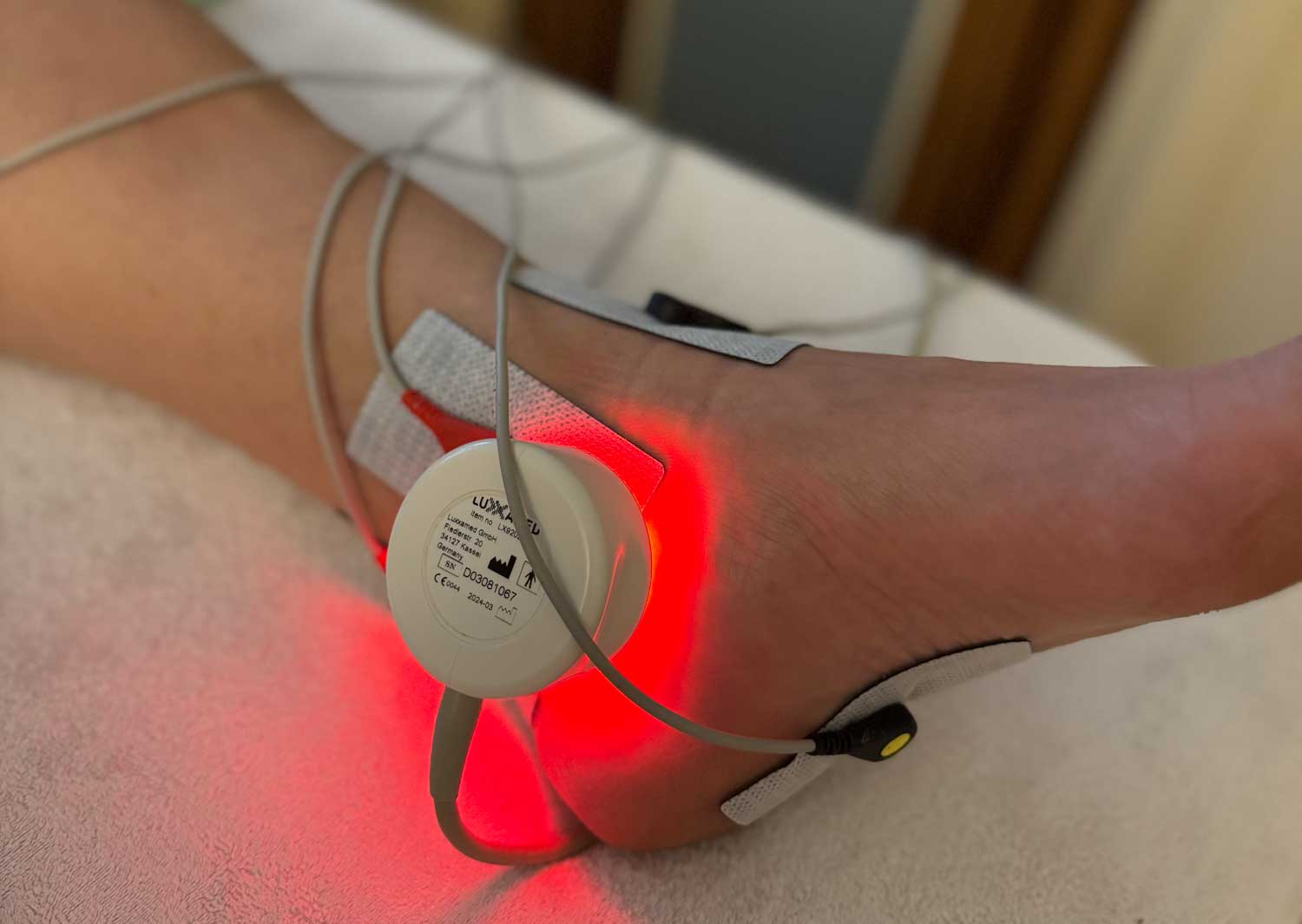
What does the therapy system essentially do?
The LuXXaMed HD2000+ is a therapy system (medical device) that utilises microcurrent electrostimulation in combination with photon/LED applications. It is intended for use in a medical setting for the treatment of acute and chronic pain, as well as neurological pain (such as nerve pain, neuropathies, etc.). The treatment is administered by trained professionals (e.g. doctors’ surgeries, physiotherapists, alternative practitioners, occupational therapists).
Why ‘gentle’?
The treatment works with very low microcurrents, which are usually imperceptible and typically lie below the threshold of perception. This makes the method fundamentally different from TENS or conventional electrotherapy, which often use significantly higher, perceptible stimulation currents.
Regulation rather than masking
The focus is on regulation: the therapy aims to support physiological regulatory processes at a cellular level – rather than merely dampening or masking pain.
Over 25 years’ experience
Luxamed has been marketing, developing and manufacturing microcurrent systems (including predecessor models) in Kassel, Germany, for over 25 years. This wealth of experience is incorporated into treatment protocols, training and ongoing development.
This is how a typical session works
The treatment is administered via adhesive electrodes and an LED light applicator on intact skin and lasts on average around 30 minutes.
Use in competitive sport
Microcurrent techniques have also been used in professional settings for many years. These include:
- VfL Wolfsburg
- TVB Stuttgart
- VfB Stuttgart
- Eintracht Frankfurt
- …
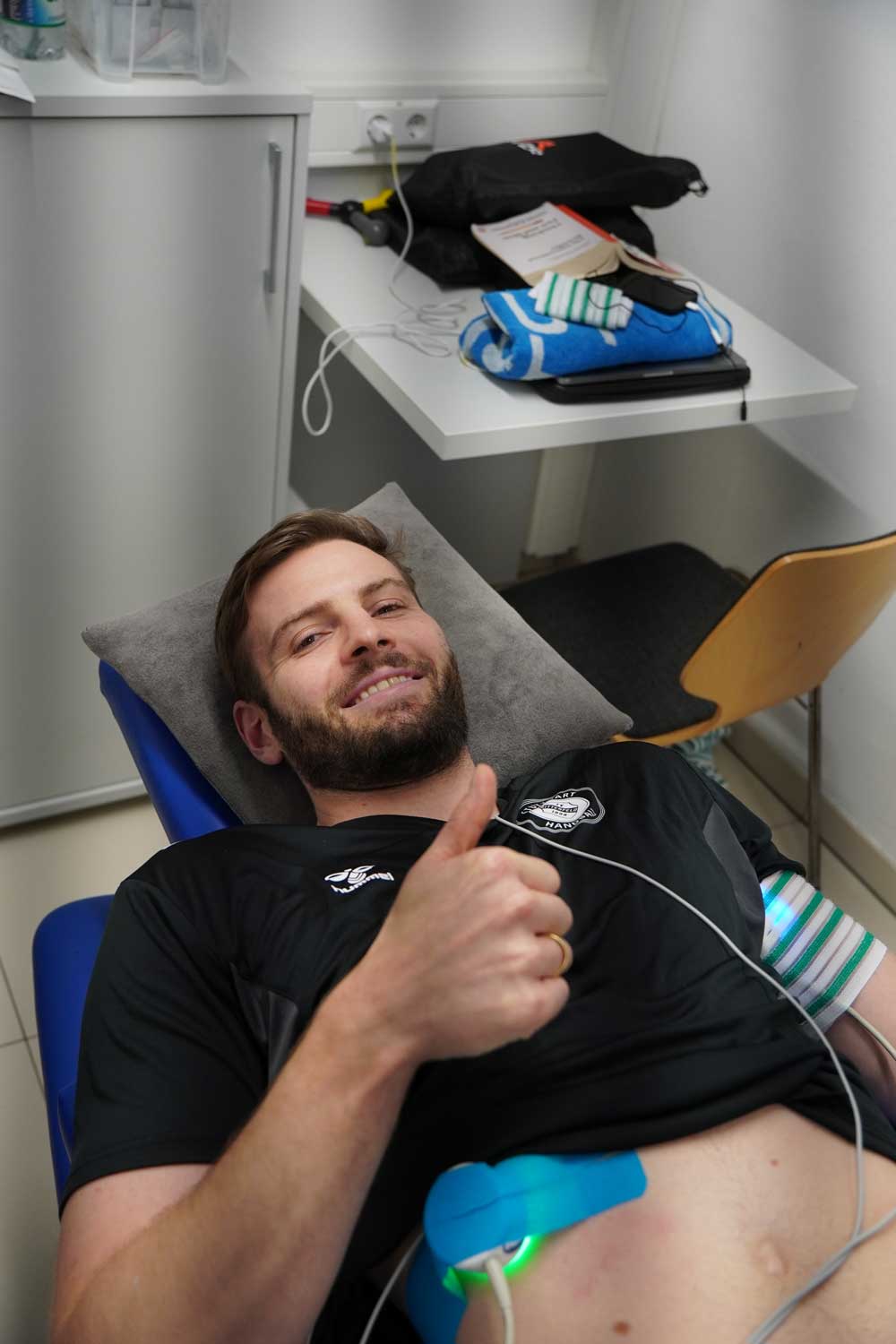
Photo courtesy of TVB Stuttgart

Clinical evidence (excerpt): Barassi et al. (2020)
In a clinical study using the LuXXaMed HD2000+, the authors reported statistically significant improvements in fibromyalgia patients in terms of pain, quality of life and symptom severity.
Note: Results are study-specific; individual results may vary.
Discussed possible mechanisms (literature review):
-
Reduction in central sensitisation
-
Effect on inflammatory factors
-
Resonance/frequency effects relating to tissue and membrane processes
You can find the link to this and other studies below.
Safety and contraindications
Please inform the treating practice before treatment of any existing medical conditions, implants or pregnancy.
Contraindications:
-
Pregnancy
-
Epilepsy
-
Implanted active electrical medical devices (e.g. pacemakers, defibrillators, etc.)
-
Acute tumour disease (cancer)
Do not use, or consult a doctor beforehand, in the case of:
-
Children under 3 years of age
-
Heart rhythm disturbances
-
Acute dizziness, nausea or disorientation
-
Use in combination with HF electrosurgery or other electrotherapeutic devices
Final statement:
Full safety information and instructions for use are available from the treating facility.

)
[1] Barassi, G., Younes, A., Di Felice, P. A., Di Iulio, A., Guerri, S., Prosperi, L. et al. (2020). Microcurrents in the treatment of chronic pain: biological, symptomatological and quality-of-life effects. Journal of Biological Regulators and Homeostatic Agents, 34(4). https://doi.org/10.23812/20-166-L
[2] CHENG, N., van HOOF, H., BOCKX, E., HOOGMARTENS, M. J., MULIER, J. C., DIJCKER, F. J. de et al. (1982). The Effects of Electric Currents on [ATP) Generation, Protein Synthesis, and Membrane Transport in Rat Skin. *Clinical Orthopaedics and Related Research*, &NA; (171), 264–272. https://doi.org/10.1097/00003086-198211000-00045
[3] El-Husseini, T., El-Kawy, S., Shalaby, H. & El-Sebai, M. (2007). Microcurrent skin patches for postoperative pain control in total knee arthroplasty. A pilot study. International Orthopaedics, 31(2), 229–233. https://doi.org/10.1007/s00264-006-0149-0
[4] Karutz, A. (2012). Investigation of the influence of nanophotonics technology on in vitro cell cultures
[5] [McMakin], C. R., Gregory, W. M. & Phillips, T. M. (2005). Cytokine changes with microcurrent treatment of fibromyalgia associated with cervical spine trauma. Journal of Bodywork and Movement Therapies, 9(3), 169–176. https://doi.org/10.1016/j.jbmt.2004.12.003
[6] Mohrbutter, M. (2011). Effect of biological cell regulation therapy/BCR (microcurrent) on chronic Achilles tendinopathy. A double-blind, randomised pilot study. Master’s thesis. University of Salzburg, Salzburg.
[7] Piras, A., Zini, L., Trofè, A., Campa, F. & Raffi, M. (2021). Effects of Acute Microcurrent Electrical Stimulation on Muscle Function and Subsequent Recovery Strategy. International Journal of Environmental Research and Public Health, 18(9). https://doi.org/10.3390/ijerph18094597
[8] PMCF study: LuXXaMed GmbH (2021): [PMCF] – Post-Market Clinical Follow-up to evaluate the clinical efficacy of LuXXaMed devices following market authorisation. PMCF user study 2021. In accordance with the requirements of MEDDEV 2.7/1 Revision 4 and Regulation (EU) 2017/745 on medical devices. Published by LuXXaMed GmbH. Kassel, last reviewed on 25 November 2021.
[9] Rockstroh et al. (2010). The benefits of microcurrent therapy administered during inpatient follow-up rehabilitation in patients following total knee replacement – a randomised clinical trial.Rehabilitation, 49(03 // 3), 173–179. https://doi.org/10.1055/s-0029-1246152
[10] Schönfelder, J., Walker, S. & Kenner, L. (2017). Effect of a new generation of devices on in vitro cell cultures. AP 3: Effect of microcurrent therapy on in vitro cell cultures (Fraunhofer FEP, ed.).
[11] Torres, R., Gonzalez-Peña, R., Arrizabalaga, F., Casaña-Granell, J., Alakhdar-Mohamara, Y. & Benítez-Martínez, J. C. (2011). Reduction of pain in cervicalgia through the application of microcurrents. Revista Iberoamericana de Fisioterapia y Kinesiología, 14(2), 48–52. https://doi.org/10.1016/j.rifk.2012.02.004