Microcurrent therapy for tendon, capsule and ligament injuries

Microcurrent therapy for tendon, capsule and ligament injuries

mikrostrom-sehnen-kapsel-bandverletzungen
Tendon, capsule and ligament injuries
Webinar recording
The recording of the webinar with orthopaedic surgeon Dr Voracek is now available on eLearning!

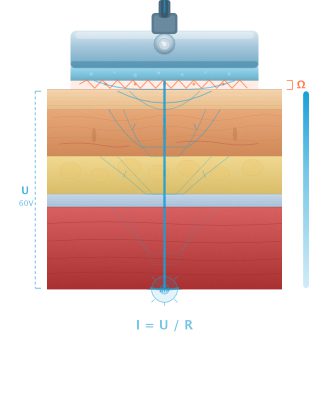
Microcurrent therapy (MCT) is a form of electrical stimulation that uses very low-intensity currents to promote tissue healing and relieve symptoms. It has been studied for various types of injuries, including those affecting tendons, capsules and ligaments. This review aims to assess the effectiveness of MCT for these types of injuries based on findings from several research studies.

Key findings

Improved healing and function of tendons:

MCT significantly improves healing and functional outcomes in chronic Achilles tendinopathy compared with conventional therapy (Chapman-Jones, 2002).

MCT improves the organisation of collagen fibres and biomechanical strength in transected tendons and shows better results when combined with adipose-derived stem cells (ASC) (Bortolazzo, 2020).

Different polarities of MCT (cathodic and anodic) improve the biomechanical properties and histopathological outcomes in injured tendons, although efficacy varies over time (Ahmed, 2012).

Gene expression and molecular effects:

MCT modulates gene expression involved in tendon repair, including TNC, CTGF, FN, FMDO and COL3A1, thereby contributing to improved structural recovery (Bortolazzo, 2020).

Reduction of pain and inflammation:

MCT reduces pain and inflammation in chronic conditions such as tennis elbow and knee osteoarthritis, and demonstrates significant improvements in pain scores and functional outcomes (Poltawski et al., 2012) (Ranker et al., 2020).

MCT, when used as an adjunctive therapy, accelerates the healing of chronic wounds and reduces pain scores, with additional benefits for inflammatory symptoms and patients’ general well-being (Harikrishna K. R. Nair et al., 2018).

Improved regeneration of muscles and soft tissues:

MCT facilitates the regeneration of injured skeletal muscles by increasing the number of muscle satellite cells and improving the cross-sectional area of muscle fibres (Fujiya et al., 2015).

MCT, when combined with traditional treatments, improves outcomes in myofascial pain syndrome by reducing pain scores, increasing muscle strength and improving neck function (Battecha et al., 2021).

Conclusion

Microcurrent therapy shows promising results in improving the healing and functional recovery of tendon, capsular and ligament injuries. It improves collagen organisation, modulates gene expression, reduces pain and inflammation, and facilitates muscle regeneration. These findings suggest that MCT could be a valuable addition to conventional treatments for various musculoskeletal injuries. Further research is required to optimise treatment parameters and fully understand the long-term benefits of MCT.

Exclusive insights into LED and microcurrent therapy

Get your ebook now, packed with information on application, science and areas of use. You’ll also receive a free newsletter and a personalised guided tour featuring videos and further information!


mikrostrom-magazin

References

Chapman-Jones, D., & Hill, D., 2002. Novel Microcurrent Treatment is More Effective than Conventional Therapy for Chronic Achilles Tendinopathy. Physiotherapy, 88, pp. 471–480. https://doi.org/10.1016/S0031-9406 (05) 60849-8.
Bortolazzo, F., Lucke, L., Fujii, L., Marqueti, R., Ramos, G., Theodoro, V., Bombeiro, A., Felonato, M., Dalia, R., Carneiro, G., Vicente, C., Esquisatto, M., MendonΓ§a, F., Santos, G., Pimentel, E., & Aro, A., 2020. Microcurrent and adipose-derived stem cells modulate gene expression involved in the structural recovery of transected tendons in rats. The FASEB Journal, 34, pp. 10011–10026. https://doi.org/10.1096/fj.201902942RR.
Ahmed, A., Elgayed, S., & Ibrahim, I., 2012. The effect of microcurrent electrical stimulation polarity on tendon healing: Biomechanical and histopathological studies. Journal of Advanced Research, 3, pp. 109–117. https://doi.org/10.1016/J.JARE.2011.05.004.
Watts, A., Millar, N., Platt, J., Kitson, S., Akbar, M., Rech, R., Griffin, J., Pool, R., Hughes, T., McInnes, I., & Gilchrist, D., 2017. MicroRNA29a Treatment Improves Early Tendon Injury. Molecular Therapy: The Journal of the American Society of Gene Therapy, 25(10), pp. 2415–2426. https://doi.org/10.1016/j.ymthe.2017.07.015.
Fujiya, H., Ogura, Y., Ohno, Y., Goto, A., Nakamura, A., Ohashi, K., Uematsu, D., Aoki, H., Musha, H., & Goto, K., 2015. Microcurrent electrical neuromuscular stimulation facilitates regeneration of injured skeletal muscle in mice. *Journal of Sports Science & Medicine*, 14(2), pp. 297–303.
Korelo, R., Kryczyk, M., GarcΓ­a, C., Naliwaiko, K., & Fernandes, L., 2016. Wound healing treatment using high-frequency ultrasound, microcurrent and combined therapy modifies the immune response in rats. Brazilian Journal of Physical Therapy, 20, pp. 133–141. https://doi.org/10.1590/bjpt-rbf.2014.0141.
Poltawski, L., Johnson, M., & Watson, T., 2012. Microcurrent therapy in the management of chronic tennis elbow: pilot studies to optimise parameters. Physiotherapy Research International: The Journal for Researchers and Clinicians in Physical Therapy, 17(3), pp. 157–66. https://doi.org/10.1002/pri.526.
Ranker, A., Husemeyer, O., Cabeza-Boeddinghaus, N., Mayer-Wagner, S., Crispin, A., & Weigl, M., 2020. Microcurrent therapy in the treatment of knee osteoarthritis. Could it be more than a placebo effect? A randomised controlled trial. *European Journal of Physical and Rehabilitation Medicine*. https://doi.org/10.23736/S1973-9087.20.05921-3.
Nair, H., 2018. Microcurrent as an adjunct therapy to accelerate chronic wound healing and reduce patient pain. Journal of Wound Care, 27(5), pp. 296–306. https://doi.org/10.12968/jowc.2018.27.5.296.
Battecha, K., Kamel, D., & Tantawy, S., 2021. Investigating the effectiveness of adding microcurrent therapy to a traditional treatment programme for myofascial pain syndrome in terms of neck pain and function. Physiotherapy Quarterly. https://doi.org/10.5114/PQ.2020.96421.
Webseminar Grundlagen β€” Webseminar Grundlagen Mikrostromtherapie und generelle Fragen.
Jetzt anmelden