Basic Seminar – Cybernetic Microcurrent
‼️Last-minute change to the seminar content due to illness‼️
‼️CHANGE to the seminar content‼️
Due to the illness of the lecturer, Karl-Peter Van der Viefen, the seminar content has been changed at short notice. Unfortunately, Mr Van der Viefen is unable to be present in person at the LuXXaMed premises, but will join via Zoom and speak about his practical experience gained over more than 15 years of microcurrent therapy. (From practice, for practice)
➡️Basic theoretical seminar on cybernetic microcurrent therapy⬅️
Lecturers:
- Patrick Walitschek, MSc
- Karl-Peter Van der Viefen (physiotherapist, alternative practitioner, osteopath)
- Dr Thorsten Stüker (physicist)
Contents:
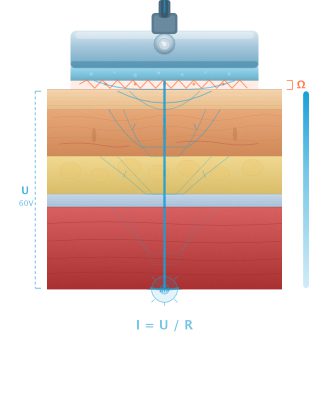
✅ What is microcurrent? – Technical explanation and relationships between the effective parameters.
✅ Science and research (LuXXaMed microcurrent and LED light therapy)
✅ Cybernetics and microcurrent
✅ From theoretical concept to daily practice – adhesive electrodes and LED light used simply and pragmatically.
✅ Practical communication (extract from a new online course) – “Selling a therapy without actually selling it”
✅ Discussion
Days
4See you at the event!
Event details
Time
Speakers
(Physiotherapist, Alternative Practitioner, Osteopath D.O.)
(LuXXaMed GmbH)
Platform
Transcript
00:00:00
Patrick: In this episode, we’d like to share with you a ‘brainstorming’ session – a ‘brainstorming’ session on a slightly different kind of seminar, or, to use the modern term, a web seminar or webinar. Of course, many people are absolutely fed up with all these ‘Zoom’ and ‘Teams’ meetings – to put it bluntly. Nevertheless, they offer a way to deliver training content – and thereby create added value – even in difficult times or when deadlines are tight. And I’m ‘brainstorming’ with the physiotherapist, alternative practitioner and osteopath Karl-Peter van der Viefen about how one might design such a seminar as a model – or, if you like, a dress rehearsal – and what the possibilities might be. And I don’t want to keep you in suspense any longer. This time, it’s not an actual interview, but simply a conversation – a ‘brainstorming’ session, in fact – about what another webinar might look like. Enjoy this episode.
00:01:12
Patrick: A very warm welcome to our new interview – though it’s not really meant to be an interview, but rather a nice, relaxed chat on a Monday evening. And with that, I’d like to extend a very warm welcome to Karl-Peter van der Viefen – or Kalle, as he’s known – and I’m delighted that we’ve found the time to record this episode, this podcast. So, good evening and hello, Kalle.
00:01:42
Karl-Peter van der Viefen: Hello, Patrick.
00:01:45
Patrick: Kalle, we’ve known each other – I’d say – for many, many years now. Perhaps you could briefly introduce yourself to our listeners, so that we can then dive straight into the topic and give a brilliant overview of what today’s topic is actually about.
00:02:00
Karl-Peter van der Viefen: Hello everyone, my name is Kalle van der Viefen, Karl-Peter van der Viefen. I’ve been self-employed in my own practice for almost 30 years now; I’ve been working with microcurrent therapy since 2005, and I’ve delivered a number of seminars on BCR therapy and for LuXXaMed. Then I got caught up with my own projects; with a new practice and setting things up, we lost touch a bit, but now Patrick and I have met up again and have been thinking about how we can work together in a meaningful way. What used to bother us? What was the most difficult thing about our seminars? We then agreed that many people simply thought: We actually have to do everything in therapy exactly as our teachers at the front do. Yet therapy is actually supposed to be an individualised process. With that in mind, we’ve now tried to put together a seminar.
00:02:59
Patrick: Yes, I’d say that actually sums it up quite nicely. I can certainly agree with all of that. We’ve run some really great seminars together. We ran all those basic seminars back then – the BCR basic seminars – together. We’ve also run seminars with other distribution companies in the past, at trade fairs and other events. And building on that, we’ve been thinking – drawing on our past experience – about how we can now apply the knowledge we’ve gained to the new challenges we face – not just in terms of microcurrent and the devices, but also the challenges that practice owners and staff face in their day-to-day work with, let’s just call them devices in general. This isn’t just about microcurrent therapy; it can be adapted to other areas as well. And I actually thought that was a really interesting topic – and it’s also something that struck me when I looked at the feedback I’ve received, based on the podcasts I’ve done in the past, as well as the old seminars and the webinars that have been running recently.
00:04:14
Patrick: And that brings us straight to one of the main topics: there’s going to be another webinar. Unfortunately, this year too, for reasons of time and organisation, we simply won’t be able to hold a face-to-face seminar, even though many of you have been hoping for one. And I think the subject of webinars is a bit of a sore point for some people, certainly in one way or another. How have you found the whole topic of webinars in general over the last year and a half, Kalle?
00:04:42
Karl-Peter van der Viefen: In my fields of naturopathy and osteopathy, there weren’t many in-person seminars either; you were practically forced to resort to webinars if you wanted to learn something new or revisit a topic from somewhere else. I’m not particularly keen on webinars because I can’t manipulate anyone’s joints or help anyone using ‘Zoom’ or other online tools. I could prescribe something, but I can’t treat anyone manually. That’s why I’m delighted when in-person seminars start up again – as is the case now; our first ones have started up again. And then we actually thought – because, really, most therapists don’t like online seminars –: How can we make the whole thing a bit more appealing? How can we get people to showcase their own knowledge rather than thinking they have to copy the teacher or lecturer?
00:05:44
Karl-Peter van der Viefen: After all, people come to every practice because the therapist has learnt their therapy, but they’ve developed their own individual style. The therapist standing there is themselves – they’re not Patrick, they’re not Kalle, they’re not Matthias; they’re themselves. And now he has to solve this problem all on his own. And then, naturally, we’ll be interested to know: what’s the problem and what did you do to solve it? Then, at some point, Patrick and I came up with the idea of running a superhero seminar. We’ll simply market the therapy as if it were a superhero. You have the chance to project light, frequency and microcurrent from your hands to solve the patient’s problem – a completely new therapeutic approach.
00:06:45
Patrick: Yes, I agree. That’s a brilliant introduction to the topic, of course. And what I really like are simply pragmatic approaches, which is why I took to the idea so well straight away. And that’s exactly what I always say – I’ve also tried to promote this in the books and scripts I’ve written: it’s not about applying a ‘copy-and-paste’ therapy, because in many areas it simply won’t work. Ultimately, that defies all logic, because at the end of the day it’s about the tool – in this case, microcurrent – but as I said, you can apply that to any other area as well. I use the tool with my own ‘know-how’ – or as you put it, Kalle, which I think is really cool – in my own style. Everyone has a wide variety of training and further education. One person is an osteopath, another is a naturopath, another, of course, a manual therapist or a chiropractor. There’s so much more out there, right up to the field of Traditional Chinese Medicine (TCM). You could list so many other things as well. Acupuncture, for example, is also a major topic; frequency-specific microcurrent therapy combines brilliantly with it.
00:07:59
Patrick: We’ve also done trigger point therapy in the past together with Dr Bauermeister – so there are so many different approaches. And what strikes me is a bit of this ‘blinkered’ behaviour, because ultimately I’ve got a device here – it could be device XY, it could be shockwave therapy, or it could be a microcurrent device – and then I’m just standing there: I’ve got a set of instructions here that say: ‘A patient comes in with a knee problem.’ So I treat the knee, because that’s what it says. But perhaps – or often, particularly with chronic injuries – it’s simply the case that the knee might not be the most fundamental starting point in the treatment plan – that’s how I’m trying to explain it in layman’s terms. And that’s what it’s all about in the end, whether this is a ‘superhero’ seminar or not – that’s the ‘headline’. But it’s really about presenting a philosophy, because ultimately, the philosophy behind it – when you work with it – is actually what brings about resounding success for the patient – and that’s what we’re aiming for. Because ultimately, there’s the classic example: anyone who buys a hammer at a DIY store only sees nails. They see every problem or every task they tackle as nothing but a nail. Of course, on the one hand you can use it correctly, but you can also use it incorrectly.
00:09:21
Patrick: And I believe that this approach to goal-setting is absolutely crucial – I think this will also be a major topic in the seminar – that we say, we want to address the topic of goal-setting; everyone’s familiar with it – it’s a bit of a cliché, really – the SMART rule: specific, measurable and so on. But ultimately, when we take a closer look at what goal-setting actually means, it’s quite interesting, because it allows me to engage with the patient in a different way – purely from a psychological and communicative perspective – by drawing on certain patterns. And I believe that’s also extremely important, regardless of the underlying therapeutic and medical context. How does that work for you in your day-to-day practice with patients – specifically, working on goal-setting models and so on?
00:10:15
Karl-Peter van der Viefen: Yes, I mean, most patients come into my practice and say: ‘I’ve got this, I’ve got that, I’ve got the other. And the doctor said: “Here’s a CD for you, here are some pictures.”’ And the patient tells me everything they’re suffering from, but they don’t actually tell me what they want. In reality, though, it’s written all over their face: ‘Make this go away, whatever it is.’ The patient doesn’t really know what to make of the diagnosis. What’s bothering them is the pain or the symptoms they’re experiencing. And in the end, that’s the only thing they’re interested in: I’m supposed to make the symptoms go away. And to do that, I often really have to come up with something. At that moment, I’m completely on my own; I stand there and have to try to carry out the treatment as best I can, to pick up on as many underlying connections as possible – ones that might be hidden somewhere – so that they feel better. And that isn’t always easy, but at some point I started to combine my therapeutic approach a little and experiment with it.
00:11:23
Karl-Peter van der Viefen: For me, the whole therapy session is actually structured like a game. The light electrodes, hand electrodes or simply my fingers help me with this. And then we’d have an idea about what was bothering us. But I can also say that I’ve always enjoyed doing this. And I can say that I used to love reading superhero comics, simply because my mum said I shouldn’t read that rubbish – that I’d never amount to anything. I found it fascinating when the Torch hurled his flames and when those beams of light shot out of Iron Man’s fingers. But actually, we’re not doing anything different. And anyone who’s retained a bit of their childlike spirit, and who’s seen the box-office successes of all these superheroes – which, as the films show, have now been adapted in all sorts of ways – will realise that this genre never really went out of fashion, because it seems to fascinate so many people. Many people also wish they had such abilities to save the world. We need abilities like that every Monday morning, and we also apply this approach in practice to achieve results. I reckon the approach is quite different this time and also moves away a bit from the deadly serious seminar – life is serious enough, but in your mind you can also have a bit of fun now and then – and you can achieve a great deal through play.
00:12:59
Patrick: Absolutely. It’s precisely this playfulness – microcurrent therapy, BCR therapy in particular, really does invite you to simply play, because, for a start, I can’t break anything; that’s the most important point. And I simply have the opportunity, thanks to the wide range of applications, to give free rein to my playful side, so to speak, as well as to the knowledge I’ve gained through my training, studies or whatever else. And I think that’s what makes it so exciting on the one hand, but – and I’ll admit this too – on the other hand it’s also so difficult, because I simply can’t just go ahead and do it. If I say – I just gave the example of the knee –: if the knee hurts, I can treat the knee. There’s bound to be some inflammation or irritation somewhere. But to get to the root cause and achieve lasting results, I naturally have to draw on my playful instinct, my intellect and my skills, whatever form they may take.
00:14:01
Patrick: And that’s a blessing on the one hand, but also a curse at the same time – that’s how I feel about it. How is it for you? How do you perceive it? Especially in, let’s say, you just mentioned Monday – well, today was Monday. I posted on social media this morning about looking for the Wi-Fi cable, which I still haven’t found. So, as of now – it’s 9.28 pm – I’ve been looking for that Wi-Fi cable since eight o’clock this morning and still haven’t found it. We’ll see – maybe I’ll find it tomorrow
00:14:34
Karl-Peter van der Viefen: So, a classic Monday. By midday, I’d had seven or eight calls from patients in absolute distress who absolutely had to have an appointment today and were writhing in pain. You’ve just got to try and make the best of it, to fit them in at some point – or at least fit them in during the course of the week. And then I’ve also been thinking more about the illnesses themselves. We’ve got all these patients with multiple conditions; the patients are… They don’t just turn up with one condition; it’s not just one joint that’s hurting – well, mainly it’s the knee that hurts – but they’ve got all sorts of bits and pieces that are causing them pain. And then I kept thinking – I used to be a big Spider-Man fan, and I still am – there was this villain, Doc Ock, a sick man with loads of legs, which he’d use to stalk his way all over the place. Illnesses are a bit like Doc Ock; with their octopus-like arms, they reach from top to bottom and can take hold anywhere in the body. And it’s precisely this Doc Ock that I have to remove, with all his octopus arms inside the body, which actually hold the illness in place and confine it. Microcurrent therapy is an excellent way of doing this, just like osteopathy.
00:15:49
Patrick: Absolutely. Speaking of osteopathy, how do you see the potential for combining microcurrent therapy with osteopathy? How long have you been practising osteopathy now?
00:16:01
Karl-Peter van der Viefen: 15 years as well. I find osteopathy fascinating. What has always particularly inspired me about the therapy was something a teacher once said: “No matter what the problem is, you can always do something with osteopathy, whatever the condition – you can always do something; you just have to think the right way round.” Microcurrent fits this approach perfectly; with microcurrent, too, I can always do something. I just have to think the right way round, and there isn’t much difference between osteopathy and microcurrent therapy. I like to use microcurrent therapy because sometimes I can work much faster with it than if I have to do everything with my hands using osteopathy. Matrix, Pischinger spaces – that’s relaxation. I’m often quicker with microcurrent therapy, so I can sometimes treat someone else in the meantime, whilst the other patient is still connected to the current.
00:17:10
Patrick: So, seen in that light, it’s actually an excellent aid in the practice. That actually brings us quite close to the topics we’ve planned for the seminar. The headline is: Be your own superhero in the practice, in your day-to-day practice. And it’s also about where we’ll be striving to provide practical and easy-to-implement guidance. I’ve always said in past seminars and on the podcast: everyone finds their own way somewhere – as we’ve said before. Everyone follows their own instincts, their own ideas and, of course, their own ‘background’. But at some point, that’s just how it is – and I can see that too. I have an internal user forum where lots of questions are asked, about specific clinical indications and even about specific patients. And in the end, I see what sort of answers come in and how those answers are put into practice – that everyone ultimately goes their own way to some extent, which is brilliant.
00:18:12
Patrick: And that’s what makes the whole thing so interesting and exciting in practice, in my view. And it simply shows that there are many roads that lead to Rome. You might be a bit quicker on one path, a bit slower on another, but in the end there’s the goal, and the stages in between – the small interim goals with the patient – that’s how I see the whole thing. It’s not just evident in the forum; I’m also involved in – or rather, I’m leading – this user study on microcurrent therapy, where, as the manufacturer, I naturally have a legal obligation to provide evidence regarding the therapy’s efficacy. And here, too, I’m seeing that I’m getting such brilliant examples of where the therapy is being used and what the effects are. Measured quite strikingly on the visual analogue scale. And it’s brilliant to see the sort of ideas users come up with when they try to push themselves a little bit at the start – so it’s definitely really exciting to witness.
00:19:35
Karl-Peter van der Viefen: I’d like to see – and I can well imagine this working – that every participant in the seminar takes something special away for themselves. It’s not about us telling them: ‘You must do this, that and the other.’ It’s about the seminar participants saying: “I did this and that, in this or that situation.” That’s also part of what’s so fascinating about microcurrent and osteopathy, and it brings us back to the superhero analogy: I don’t like losing; if I can’t manage something in my practice, it feels a bit like a minor defeat. I’ll always try to get to the bottom of the matter. Sometimes I have to refer them on to get another test result or have something checked again – but I don’t like losing. And microcurrent is one of the tools I can use, and ultimately the reward is when people say: ‘You’ve done a good job, or a brilliant job. You’ve got healing hands, or I’ll be back, I’ll recommend you to others,’ or whatever. That’s really just what we all want. Nobody likes to lose, and patients stop coming if you’re not successful.
00:20:49
Patrick: That’s if I want to put the whole thing in a slightly provocative light for a moment. I’ve also had this in a podcast with an interviewee – I won’t name names – who simply says: “Well, if a therapy – or it doesn’t matter which therapy – doesn’t work for once, then the problem, or rather, you very often see the problem reflected back at you in the mirror,” and that’s the beauty of it. You mentioned that personal sense of failure – that’s part of it, of course, and naturally there’s also a certain form of ambition that’s stirred within you when you say: ‘Well, I just want to achieve a goal now. Perhaps I’ve set myself a goal, together with the patient, to achieve this or that. Are we perhaps not going to get there?’ Then it’s important to also look at: where in my process might I be going wrong – I can anticipate this a little bit now, because this will be a topic covered during the seminar. I’d like to introduce a model here, which actually comes from a completely different field – the field of psychology and communication – the so-called TOTE model: Test – Operate – Test – Exit – and I believe that, ultimately, this is a brilliant decision-making tool that you can use.
00:22:00
Patrick: I’ve set a goal, I carry out a test: have I achieved the goal? – and, first and foremost, how do I actually know when I’ve achieved it? For many people who set goals, this isn’t even the focus. And that’ll be one of the areas I’d like to cover in the seminar. That’s why it’s actually going to be a slightly different seminar to the ones we’ve run in the past. I think that’s a good thing, and I’m very, very keen to hear the feedback at the end.
00:22:33
Karl-Peter van der Viefen: We’re breaking new ground here ourselves and, of course, we’re relying on the help of our listeners. You’ll have to take a look now and give us a bit of a hand.
00:22:47
Patrick: Absolutely, and I’d like to use this podcast episode to encourage you, as listeners, to take part in the seminar if you’re interested. The details will be published in the next few days, including the registration information. It’ll take place via ‘Zoom’ – most of you are familiar with ‘Zoom’, of course – and if you have any ideas or suggestions in the run-up to the event, that would be brilliant, because it would allow us to tailor the session even more closely to your wishes and ideas.
00:23:18
Karl-Peter van der Viefen: Yes, I’m looking forward to it.
00:23:22
Patrick: Great. I think we’ve also found a brilliant way to wrap up our conversation – I don’t even want to call it an interview, because that’s not really what it was, nor was it planned as such, nor is it meant to be – a conversation, a ‘brainstorming session’, a public ‘brainstorming session’. And I think that’s really, really cool; I reckon I should do it more often. I’m looking forward to the feedback on this episode, but I think it’s a brilliant idea. I’d love to hear that sort of thing more often in podcasts, rather than just the usual question-and-answer format in interviews. I found it absolutely fascinating; I thought it was really lovely, brilliant. Thank you so, so much in any case, Kalle. Firstly, for your time and for the input you’ve given, and just a quick note for the listeners: we’ll be posting the link to the seminar – and the registration details – in the ‘show notes’. And, of course, all of this will also be available on our website at www.luxxamed.de.
00:24:20
Karl-Peter van der Viefen: I can’t think of anyone else who’s offered a seminar like this so far.
00:24:24
Patrick: I haven’t come across one either.
00:24:26
Karl-Peter van der Viefen: It’s completely uncharted territory – a complete experiment that we hope will be a success. And we wouldn’t mind at all if the experiment really took off and went through the roof.
00:24:40
Patrick: No, we’re not afraid of that. So, once again, many thanks, Kalle, for your time. And I’m looking forward to it – it’s coming up soon, so to speak, in just under four weeks. So we’re right up against the wire with the marketing. But perhaps to wrap up, that’s one of the advantages of webinars, I think. You don’t need to travel, you don’t have to book a hotel, and so on. On the day of the seminar, you just sit down at your laptop, your iPad or whatever, and you can take part – in flip-flops and swimming trunks, if you leave the camera off – your own camera isn’t important for the seminar at all. So, in that respect, I think it does have a certain charm of its own.
00:25:35
Patrick: Well then, thank you very much for your patience. I hope we’ve managed to spark a bit of curiosity and provide a few exciting ‘teasers’ for our seminar. And I’m looking forward to lots of feedback on this podcast episode and, of course, to a lively turnout at our webinar. Thank you very much, and have a lovely evening, good morning, or whatever the time may be, wherever you’re listening to our podcast. Until then, thank you very much and ciao.
00:26:09
Karl-Peter van der Viefen: Have a lovely time, from me too. See you later.
00:26:11
Patrick: That’s it for this episode from LuXXaMed GmbH. And if you’d like more information about this brainstormed seminar or this seminar format, head to the ‘show notes’, where you’ll find a direct link to our website. There you’ll find all the further details about our webinar. On that note, thank you very much for tuning in, thank you very much for listening, and see you next time.