How on earth do I apply these adhesive electrodes correctly to my patients during microcurrent therapy?
You are currently viewing a placeholder content from Default. To access the actual content, click the button below. Please note that doing so will share data with third-party providers.
More InformationThere are many theories and myths surrounding the application and general use of adhesive electrodes in microcurrent therapy, and often a desire for a ‘cookbook’ containing hundreds of ‘recipes’. When should/must the electrodes be applied, how and where, and is it also possible to use damp towels or water baths? Question after question about which adhesive electrode application method ‘one’ should use to achieve success most quickly and effectively. However, the answers to these questions cannot be given with a simple ‘YES’ or ‘NO’, or by saying ‘place one on the ventral side and the other on the dorsal side’. If one understands the technical principles of microcurrent, it becomes clear that there are only a few differences in the practical approach to applying electrodes.


The concept – or rather, the concepts – for applying adhesive electrodes are multifaceted yet simple, once you bear in mind how microcurrent works and have a clear definition of your objectives.
In our training courses and seminars, we usually demonstrate three different approaches:
- The classic conventional medical approach by Dr Vlastimil Voracek, MD
- The systemic approach of physiotherapist Matthias Rother
- The regulatory approach of alternative practitioner Burkhard Hock
Just as in real life, all approaches lead to the desired outcome. This depends on one’s personal training and the personal ‘tools’ that are to be used in conjunction with microcurrent therapy – or, indeed, not to be used at all.
Anyone wishing to attend a training course on Burkhard Hock’s regulatory approach still has the opportunity to do so this year!
You are currently viewing a placeholder content from Default. To access the actual content, click the button below. Please note that doing so will share data with third-party providers.
More InformationTranscript: Microcurrent Adhesive Electrodes
Speaker 1: Welcome to a new podcast from LuXXaMed GmbH. In this episode, I’ll be addressing the question, ‘How do I actually apply the adhesive electrodes?’, and at the same time, ‘Is there actually a set method for this? Are there different approaches, and do I actually have to use adhesive electrodes? Could I perhaps use wristbands to create general circuits? Can I use water baths or simply a damp towel as an electrode?” I’d like to explore all these questions a little in this episode, and we’ll get started straight after the intro.
00:00:47
Speaker 1: Adhesive electrodes and application concepts: This is certainly an area of microcurrent therapy – specifically, frequency-specific microcurrent therapy – that’s shrouded in many myths, and whilst there are undoubtedly always highly individualised approaches, the question also arises: “Are there any established placement concepts?” By ‘established’, I mean: if I have a patient with knee problems, do I then apply the treatment in the same way to that patient – and indeed to all patients with knee complaints – let’s take a classic case of chronic osteoarthritis, for example – do I apply it in exactly the same way to all patients? That is certainly the question that users of microcurrent therapy, particularly those who are new to it, ask themselves. And are there perhaps so-called ‘cookbooks’ or ready-made protocols for specific indications regarding the placement of adhesive electrodes? And are there other options besides adhesive electrodes, perhaps using plastic electrodes moistened with ultrasound gel to ensure conductivity? There are also wristbands that you can wear yourself or apply to the patient to deliver the microcurrent into the body via the wristband. So there are a wide variety of approaches. I think the classic method is certainly the standard adhesive electrode, which was usually – or at least used to be – a single-use electrode, but can now certainly be reused, at least on the same patient. But of course, this is always determined by the manufacturer of the adhesive electrodes themselves, because such an adhesive electrode is – and this must not be forgotten – a medical device and must be assessed by the manufacturer for conformity for distribution within the European Union, bear the CE mark and, as part of this conformity assessment – and, of course, particularly with regard to biological compatibility – be assessed to ensure that certain issues, such as skin irritation, allergic reactions and so on, cannot occur.
00:02:52
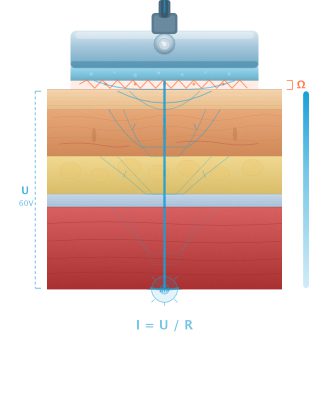
Speaker 1: Yes, perhaps we should start with the basic concept of the electrode set-up. Of course, there are ready-made placement diagrams with pictures that you can look at and say, ‘OK, I’ve got a knee patient here, and here’s a picture of how to place the adhesive electrodes directly around the knee.’ I always call this the ‘where-it-hurts’ method. It’s got nothing to do with the place in Switzerland, but rather it’s the method based on where it hurts. That might be correct to a certain extent, but as I said, only to a certain extent, because there’s one thing I’d like to say straight away and get out of the way: The question always arises: when applying a fixed arrangement to individual people – given that we are, after all, individuals with our own specific problems – can I simply adopt a ‘copy and paste’ approach, particularly with microcurrent therapy? Because you must bear one thing in mind: Microcurrent therapy – or most microcurrent therapy devices – are, of course, clearly developed, designed and intended for use in the field of pain management; however, we must bear in mind: what exactly is pain management? According to the definition provided, for example, by the WHO (the World Health Organisation), physical measures are included, albeit only as a form of adjunctive therapy. And this naturally raises the question: what is meant by this? Essentially, in classical pain therapy, this refers to the suppression of pain and the potential inhibition of stimuli in their transmission via the (unconscious) control system, so that the pain is not perceived in the brain in the way it actually occurs. And that is precisely what microcurrent therapy cannot do – nor is it intended to do so. After all, the real aim is to apply a stimulus locally and at the root cause within the metabolism – via the current, the frequencies of course, the polarities and so on, and immediately, including via the voltage that is ultimately applied, a factor that is actually relatively rarely discussed in the field of microcurrent therapy, but of course, according to Ohm’s law, we can only deliver a microcurrent into the tissue, into the body, if we also have a corresponding voltage applied, in order to overcome the underlying load resistance – which, of course, is represented by the skin itself and has a very, very high resistance, or to ionise the outermost layer of the skin, so that the microcurrent can then take effect at its intended target within the tissue. These fundamentals are important to bear in mind when considering microcurrent therapy, including the electrode set-ups. For it very quickly becomes clear that, when it comes to conventional pain therapy, microcurrent therapy actually sets us apart. Even though – and I would like to emphasise this once again – microcurrent therapy devices are, of course, medical devices that must have a specific intended purpose as defined by the manufacturer, typically the treatment of acute and chronic pain, and are classified accordingly under medical device regulations. But as I said, when it comes to the electrode systems, one should take a rather more nuanced view. By this I mean really considering, first of all, what exactly is the current aim of this therapy, of this therapy session? The therapeutic objective should, of course, be determined in consultation with the patient. Is the aim purely to reduce or manage pain? Is it to improve mobility, so that certain ranges of motion improve during or after the therapy? Or is it both? Is it about improving pain symptoms whilst also improving the mobility of certain limbs, or something else entirely? These are, of course, factors that will have a significant influence on the placement of the adhesive electrodes, if we’re starting with the adhesive electrode option. Of course, it’s also the case that – to stick with the example of a knee patient – one patient might come in with a trauma, whilst another has a chronic condition, and yet another has biomechanical issues that have developed from the trauma, namely through the postural compensation pattern that can arise there. Or there may simply be a different, underlying primary injury present – for example, in the hip region, the sacroiliac joint (SIJ) region, or the lower back (LBS) region – whatever the nature of the condition may be in the individual patient. And, of course, this information must be factored into the treatment objectives themselves – in this case, the microcurrent application itself – but also, naturally, into the application of the adhesive electrodes. Therefore, in my view – and this is my personal opinion – whilst fixed electrode protocols may be useful for beginners, particularly when one is just starting out with microcurrent therapy in one’s practice and naturally needs a guiding principle to follow at first, but ultimately, one should certainly develop one’s own therapeutic concepts – whether drawn from manual therapy, osteopathy, or even from the fields of TCM, acupuncture and so on – which can and should be incorporated into the approach to applying the adhesive electrodes. This is important to bear in mind, because ultimately it is no longer a matter of trial and error, but rather various concepts derived from one’s own training or studies that should be incorporated into microcurrent therapy. And that is precisely why this ‘copy and paste’ mentality is relatively difficult to put into practice when working successfully with microcurrent, as we are, after all, trying to to bring about changes here – both locally and systemically within the tissue – using adhesive electrodes, the current itself, and also LED light therapy, which is complementary and should certainly be used extensively alongside microcurrent therapy. But of course there are other approaches as well, and we ourselves have run training courses – quite frequently, in fact – that focus on what we call ‘systemic components’. ‘Systemic’ means that, for a patient with a knee problem, for example, you do not necessarily treat them directly at the site of the problem straight away – certainly not in the case of chronic patients – but rather take a step back and ask: ‘OK, what might the biomechanical component be here? And how can I, first of all, influence and treat the biomechanical system – and, for that matter, the autonomic nervous system – accordingly? And how does that affect this – let’s just call it a secondary injury to the knee – how does it affect that, how does it affect mobility, and so on and so forth. In other words, all these mechanisms available to a doctor or therapist, right up to, of course, a physical examination, and assessing where I might incorporate specific trigger points into the placement of the adhesive electrodes or even into the LED light therapy? And how can I use this very concept to determine the placement of the adhesive electrodes? I think that would be the next step after the Dawo’s Method – to really start getting to grips with these concepts and see, right, I’m naturally looking at the patient as a whole; I’m not just looking at the patient’s knee in isolation, but I’m certainly also considering other points of intervention and areas of application. And this is where microcurrent therapy allows us to influence the tissue and interact with it in a very gentle way. Because – and I’d like to reiterate this – whilst it is a form of pain therapy, let’s consider this: if we stick to purely electrotherapeutic methods, to physical therapies, what does, for example, a therapy involving very, very high currents – comparable to microcurrent therapy – actually do? Well, it simply ensures that the pain gate control system is influenced, so that, in the best-case scenario, the transmission of stimuli is interrupted – which, of course, doesn’t usually work like that – but at least it is dampened – and that is something microcurrent therapy cannot do; nor is it the intended purpose at all. So it is not the actual aim of this therapy; rather, it is about deep regulation within the tissue, specifically to reduce inflammation. The aim is to improve blood supply, to enhance ATP synthesis and protein synthesis – and ultimately, therefore, to support healing processes or, to put it simply, what I’d summarise as regulatory processes. Microcurrent therapy is also nicknamed ‘Biological Cell Regulation’ or BZR therapy, precisely because it involves regulatory approaches. However, as I mentioned at the start, there is also the option of not using adhesive electrodes; let’s take the example of water baths, for instance – that should help you visualise it. I could, of course, show you a picture now, but in a podcast it’s rather difficult to make use of visual aids. So let’s stick to the auditory channel and I’ll try to explain it to you simply. Let’s take this example: you have a patient with, say, polyarthritis in the finger joints. And how, for example, can I work there using adhesive electrodes? It’s quite difficult, because when joints are affected in multiple locations – particularly the finger joints – it’s actually somewhat trickier to use adhesive electrodes. Of course, I could start by adopting a systemic approach here, because perhaps – let’s just assume this for the moment – this arthritic inflammatory condition or rheumatoid condition affecting the hands and fingers might actually have a systemic component; it may or may not. However, to be able to treat the area locally, one option – for example – is to use a small bowl and a water bath, simply adding an alkaline salt, such as bicarbonate of soda, to naturally improve the conductivity of the water, as this is very important in this case. And, of course, this alkaline salt has an additional effect; according to the manufacturers of these alkaline salts, at least, it is also said to have a detoxifying effect via the skin. Whether that is true or not, I’ll leave open to debate, but it certainly can’t do any harm. When it comes to microcurrent therapy, this alkaline salt certainly helps us to improve conductivity. Now, if you imagine that in devices for microcurrent therapy we have channels from which the cables emerge, and each cable naturally has an anode and a cathode – that is, a positive and a negative pole. And if we now place one of these poles into this water bath – without an adhesive electrode, but simply ensuring that the purely metallic contacts come into contact with the water – and apply the opposite pole to the patient – taking the example, as mentioned, of treating the hands – to the upper arm, for instance, then we achieve the effect that the current seeks the path of least resistance – again, in accordance with Ohm’s law, of course – which we must certainly take into account in microcurrent therapy in general, as it does explain certain mechanisms of action; it’s a relatively interesting area, but returning to our example: One electrode is placed in the water, and the other is placed on the patient’s skin. What happens now? The current naturally spreads through the salt water first, before flowing to its opposite electrode – via the fingers and the hand lying in the water bath. I’ve received patient testimonials myself – or rather, user testimonials – regarding this approach, and the results are certainly quite interesting in this field; that is, for any symptoms of rheumatoid or polyarthritic conditions, right through to the treatment of Sudeck’s disease, particularly in the extremities – it’s certainly worth looking into. Yes, so this area is also a possibility. Of course, you can take the whole thing a step further, for example with a foot bath and so on and so forth. Important, of course – a very important point to bear in mind: Microcurrent devices are electrical devices, so they should, of course, be kept away from water; therefore, ensure that the cable is of a suitable length, and, of course, always pay attention to and follow the instructions in the user manual for your device or product, as this is absolutely crucial to bear in mind.
00:15:38
Speaker 1: Yes, what other options are there? In the field of frequency-specific microcurrent therapy, originating in the USA, there’s also, of course, the treatment method involving the use of damp towels, where, so to speak, these adhesive electrodes aren’t used, but no adhesive electrodes are used at all; instead, there are carbon-plastic electrodes – essentially a conductive plastic, if you like: These are placed inside the damp towels and then wrapped around a knee or positioned on the patient’s neck, with the opposite pole applied to the patient’s feet if necessary. At the moment, it’s being used a great deal, for example, in cases of (unv.) trauma; in such cases, you can work via a damp towel from the nape of the neck right up to the patient’s chest area. It’s important, of course, that these two damp towels representing the two poles do not touch, because – as I said – electricity takes the path of least resistance; otherwise, the current would simply flow through the towel rather than through the patient’s tissue. Just a brief note on the possibilities. Yes, I’d also mentioned the wristbands: these are certainly options that can be used to make a systemic application relatively simple and quick. We carried this out for a while in combination with osteopathic and manual therapy techniques, where the practitioner, the therapist, puts on these wristbands and then, through their hands, so to speak, carries out their intermanual therapeutic and osteopathic interactions with the patient, whilst the current is naturally conducted into the patient’s tissue via the hands. This approach has fallen by the wayside a bit. I know it was very well received by many, but it might be worth reintroducing it in future on our internal training portal at LuXXaMed.de and perhaps exploring it in greater depth. So, of course, these possibilities do exist. Now, perhaps to conclude, the question: there is, of course, the concept of systemic application, based on the principle of ‘moving away from the symptom and towards the system’. If you take a look at our podcasts and scroll down a little, you’ll find a seminar featuring physiotherapist Matthias Rother, who has been working with microcurrent therapy for over 20 years and is part of our teaching team – he’s also a regular lecturer both nationally and internationally – specifically on the application of microcurrent therapy within a systemic approach. And he follows a fundamental principle, generally working with one, or at most two, different adhesive electrode sets along the muscle chain pathway – you can relate this to muscle chains, whilst others might trace it back to the meridian pathways, whatever the case may be. But first and foremost, it’s about the fundamental, systemic approach; then there’s local interaction using LED light therapy – via trigger points, muscle attachment points and, of course, the body’s reflex muscle system – whilst at the same time, through this systemic arrangement of adhesive electrodes, he has the ability to truly influence the system – the autonomic nervous system and, of course, the muscle chains and fascial tracts – because it is precisely here that the tissue, specifically the fascial tissue, responds very, very quickly to the microcurrent at the correct frequencies. So, firstly there’s the local application, where I really take a look and think, “Right, I’ve got a (unv.) radial pattern here and am really only working on the elbow, leaving out the shoulder, cervical spine, etc., or perhaps even organ loops and organ fascial tracts”, then of course you can work that way. How sustainable is such a local, symptomatic application? Well, bearing in mind the definition of pain therapy, I’ll leave that open for now. So, we’ve got these two approaches. There is also a third approach: there are certainly many other approaches, but these are the three we actually cover in our training courses and seminars. The third approach is also a very interesting method, practised by alternative practitioner Burkhard Hock. We’ve also recorded a podcast interview with Burkhard Hock; he is the founder of Hock pain therapy and draws on his experience with this pressure-point therapy – the Hock method or Hock pain therapy – in the application of microcurrents, and he employs a completely different approach to electrode placement: The aim here is to see, okay, how can I – in a manner of speaking – use interference – the microcurrent isn’t interference electrotherapy, nor is it meant to be – but how can I, via the points where the electrodes intersect, really target specific areas to potentially increase the current density in certain regions and how can I reduce it in others? He has also developed a very interesting electrode configuration here, always in combination with a regulation system. This means that he generally uses four electrodes – that is, two channels – to deliver specific current densities to the painful areas, trigger points and so on, whilst simultaneously employing a regulatory system to regulate the tissue, support the lymphatic system and natural lymphatic peristalsis, and so on. But, as I said, there are different paths that lead to Rome, so to speak – as is the case everywhere – in that once you start by viewing microcurrent therapy and the microcurrent device as a tool, and then simply look at what the objective is with the patient and ask yourself, “Right, what does the current actually do in the tissue?” or ask, “What exactly does the current do in the tissue?” That could make for an interesting next podcast episode, because it helps to delve deeper into this philosophy of microcurrent and to further develop the treatment concept – by which I mean to identify what the patient’s problem is, what needs to be achieved, what underlying conditions are present, What are the primary pre-existing injuries? And so on and so forth. What is the patient’s condition, so that we can then find the optimal treatment for each individual patient through the application of electrodes and LED light therapy? Yes, that’s it for now regarding the use of microcurrent therapy with adhesive electrodes, water, towels and so on and so forth. There are, of course, plenty of instructions for use. We’ve made these available on our internal training portal at www.luxxamed.de: you can register there and have a look. It now contains nearly 17 hours of video material, along with short e-books and white papers, which of course demonstrate local applications but also explain the systemic approach and the effect of the current on the tissue. There are some absolutely brilliant seminar recordings by our medical director, Dr Voracek, an orthopaedic surgeon from Memmingen, who has also been using microcurrent therapy for over 20 years and has carried out a great deal of research and studies in collaboration with us. And yes, all of that is included in the internal training area. So, if you’re interested, just pop over to the website, and in the next few podcast episodes we’ll certainly be going into a bit more detail on this topic – the philosophy behind microcurrent, what the current does in the tissue, and so on and so forth. But that’s all for this episode for now. Thank you for tuning in, thank you for listening, and for sticking with us through this rather lengthy episode. If you have any questions, feedback or the like, you’ll find our contact details in the show notes for this podcast. Do visit our website, and check out a short blog post dedicated to this very episode. And of course, you’re very, very welcome to leave us a review on iTunes or on any other podcast platform you’re listening to us on – be it Spotify, Google Podcasts, or whatever. Well, on that note, once again: thank you very much, and see you next time!