Microcurrent Talks 2/3 – Interview with Dr Voracek
Part two of the podcast series with Dr Voracek
You are currently viewing a placeholder content from Default. To access the actual content, click the button below. Please note that doing so will share data with third-party providers.
More InformationThe ‘Microcurrent Conversations’ episode enters its second instalment. (You can find Part 1 of the interview here >>> ) Orthopaedic surgeon Dr Voracek explains his model as he would to a ‘complete novice’ in microcurrent therapy. In other words, his blueprint for practical application with patients.
In the view of the orthopaedic surgeon, Dr Voracek, we offer something to the tissue, and the tissue either accepts or rejects this for its own regulation. For this reason, LuXXaMed therapy is frequency-specific and constantly adjusts the modulation of the microcurrents in resonance with the tissue. It is important to know the tissue’s current state of modulation, as otherwise one would be treating ‘on a wing and a prayer’.
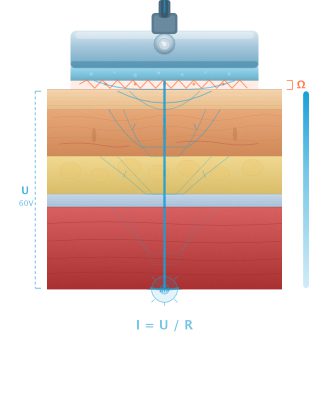
One of the key points is how the tissue functions. The microcurrent, in his view, is easy to explain even to sceptics through the laws of chemistry, physics and electrical engineering.
“You only really understand it once you’ve had a treatment. After two sessions, you’ll get up and say, ‘Oh my, my knee’s better.’ Then you’ll come back the next time and we’ll ask if the relief is still lasting; one person might say, ‘Yes, it’s got a bit better’, another, ‘Yes, it’s even better’, or even, ‘It’s got worse’. Then I ask, ‘Why has it got worse?’ ‘Well, because I’ve been doing a bit more again – precisely because I had less pain straight after the session.’ You come back because you’ve noticed that something has changed, and you’re getting value for your money.”
From the perspective of the physician and orthopaedic surgeon, Dr Voracek, microcurrent is a way of influencing tissue metabolism. Studies such as that by Schönfelder et al. (2017) have been able to demonstrate, through laboratory tests, that microcurrent is capable of reaching the cells and positively influencing them. But the therapy also impresses in clinical practice. Barassi et al. (2020) demonstrated the effect of microcurrent on chronic pain and fibromyalgia syndrome with statistical significance.
Barassi, G., Younes, A., Di Felice, P. A., Di Iulio, A., Guerri, S., Prosperi, L. et al. (2020). Microcurrents in the treatment of chronic pain: biological, symptomatological and quality-of-life effects. Journal of Biological Regulators and Homeostatic Agents, 34(4). https://doi.org/10.23812/20-166-L
Schönfelder, J., Walker, S. & Kenner, L. (2017). Effect of a new generation of devices on in vitro cell cultures. AP 3: Effect of microcurrent therapy on in vitro cell cultures (Fraunhofer FEP, ed.).
You are currently viewing a placeholder content from Default. To access the actual content, click the button below. Please note that doing so will share data with third-party providers.
More Information
Transcript of the interview on the use of microcurrent in orthopaedics
00:00:00
Presenter: Hello and a warm welcome to a new episode from LuXXaMed GmbH. We are manufacturers and developers of microcurrent devices in Germany – specifically, frequency-specific microcurrent devices incorporating LED light therapy technology. My name is Patrick Waliczek, and in today’s episode I bring you the second part of the podcast interview with the doctor and orthopaedic surgeon Dr Voracek, who has been successfully using microcurrent therapy in his practice for over 20 years and is a lecturer on this therapy, both in Germany and abroad, in other European countries, and we have also organised several joint visits to Asia to familiarise therapists and doctors with the therapy and its application. Yes, this is the second episode of a three-part interview series. So next week, the third and final part will be released. In this episode, Dr Voracek explains, for example, how he explains microcurrent therapy to patients and how he explains it to sceptics, whether they be colleagues or patients. And at the end of the episode, he describes his approach: how he selects the adhesive electrode application, for example, how he selects the programmes for microcurrent therapy, and what the basic principle is – for example, assessing the direction of tissue function and then applying the adhesive electrodes accordingly. He explained all this in a relatively simple and practical way, so I won’t keep you in suspense any longer. We’ll catch up again very briefly at the end of the interview. And now I hope you enjoy this episode.
00:02:00
Interviewer: What are the treatment intervals in your practice? Let’s stick with what you’ve just described – the example of osteoarthritis – what are the typical intervals between therapy sessions per week?
00:02:13
Dr Voracek: Well, it always depends on the problem itself, of course. There are very acute cases or very, very chronic cases which require, at the start – and this is what I prefer – that I can treat the patient more or less every day in the first week, or at least four times a week. And then later on, I naturally extend these cycles. But generally speaking, the ideal approach is to treat the patient very frequently in quick succession at the start and then, later on, once the patient realises they’re feeling better, simply space out these appointments. And then they sometimes still come once a week, because it’s important that, at the start, when people come in with pain, they tend to take the weight off the limb and don’t move it; but it’s important that they learn to put weight on the knee or the limb and see how the pain develops. Are they still pain-free? And then, of course, once the patients are pain-free, I can stop the treatment at some point. But you either give an injection, prescribe tablets, or use microcurrent therapy.
00:03:30
Interviewer: What do you make of the point I’ve tried to emphasise in my talks – that, of course, the questions often arise: Right, how do I explain microcurrent therapy to my patients? They’ve come from other treatments, from therapists, and sometimes even from doctors – so how do I explain it to them in simple terms? So how would you explain it to a patient – let’s say I’m your patient and I know absolutely nothing about the procedure; I’m only familiar with electrotherapy and, naturally, as a patient, I’m afraid of electricity and may even have had bad experiences with electrotherapy in the past, which, it has to be said, is not uncommon. How would you explain microcurrent therapy to a patient as anxious as me?
00:04:13
Presenter: Well, first of all, I’d need to explain to the patient the difference between conventional electricity and microcurrent therapy. With conventional electricity, we’re naturally dealing with completely different current strengths. That means we’re using a fraction – one thousandth – of the current strength we’d normally use in conventional electrotherapy, or in some cases even less, so the patient rarely feels anything at all. Sometimes they feel a slight tingling sensation. Then I explain to them that we’re essentially working at the level of the body’s own electrical current; this is different from (unv.), as if they were to stick a finger into a socket. So they needn’t be afraid of that. In other words, we’re dealing with very, very, very weak leakage currents. It’s a bit like if they were to take a weak 9-volt battery and place it on their tongue; with the 9-volt battery on their tongue, they can feel a slight crackling sensation. And yes, that’s just how weak the current is. And then, of course, I explain to people that there are many roads that lead to Rome, and the more paths we take, the quicker we’ll get there. And I say, You have… – I explain: Listen, we’ve ruled out a morphological problem here. That might work too, but we also have a metabolic problem here. And you can see for yourself that the tissue is overheated. It’s overheated because there’s inflammation, but it’s not a bacterial or viral inflammation; rather, it’s a metabolic inflammation where some tissue damage has occurred, which has triggered the entire inflammatory cascade; and we can treat this inflammatory cascade by either applying ice to freeze it, so that the inflammatory cascade comes to a halt. However, we do not know when it will come to a halt, or how it will come to a halt. And then we try to regenerate the tissue. And, of course, we cannot do that with ice. Nor do we know how much heat we can apply. But we do know that if we have a measurement method with which we can communicate with the tissue, then ultimately we know the condition the tissue is in; and based on that, we can – or rather, the device does it itself nowadays – but based on that, a certain current modulation is delivered to the tissue, and this tissue can utilise this current and use it for its, shall we say, regenerative processes. And people use it – of course, they simply don’t understand it. But they only really understand it once we’ve carried out a treatment; after two sessions – let’s say back-to-back, which takes nearly an hour – they’ve had their treatment, and then they stand up and say: Blimey, my knee’s better! At that moment, they realise that something has genuinely happened and that I haven’t overpromised. And then they come back next time, and you ask: Is it still holding up? One says: Yes, it’s got a bit better. Another says: Yes, it’s even better; it’s holding up. Yet another says: It’s got worse. So I ask: Why has it got worse? – Well, because I’ve been doing a bit more again, as I was in less pain. So these are precisely the sort of problems that arise. But sometimes you have to drag the information out of people to find out how things have gone since the treatment. But you have to bear one thing in mind: as I run a purely orthopaedic private practice here, people wouldn’t come if it didn’t help; they come because they’ve noticed that something has changed, and they’re getting value for their money. And I mean, I do want to help people, and for me it wouldn’t be satisfactory if I didn’t achieve any therapeutic results.
00:08:36
Interviewer: Before we get back to the procedure – such as how you apply electrodes, what your typical approach is, and perhaps how you select the programme – I’d like to ask you a follow-up question. Let’s call it a provocative follow-up question: what would you say to someone – be it a patient, doctor or therapist – who says: Well, microcurrent – if you believe in it, it’ll probably work. But actually, it’s all hocus-pocus.
00:09:04
Dr Voracek: Well, it depends on who I’m talking to. But any intelligent or educated person ought to realise that electricity – physiological current – triggers a reaction in the body, whether positive or negative. In other words, everyone knows that if they stick their finger into a socket, they’ll get a reaction. So they can’t dispute that. They can claim otherwise, of course, but they’d have to tell me where they got that from and why they know it. Or where do they get their knowledge from? And I mean, people don’t have that knowledge – or at least I don’t think I’ve met anyone yet who did – so I can tell them: Look, we’ll give it a go; if you say it doesn’t work, you can say so yourself. And if you’re honest, you’ll give me an answer – a proper answer. And I’m more or less not afraid to try this out on patients, because I know it works.
00:10:09
Interviewer: You’d take up the challenge.
00:10:12
Dr Voracek: I take it on every time.
00:10:14
Interviewer: Yes, very good. No, because that’s just interesting. I mean, we’ve actually been on the market for 20 years now, as of this year. But there are still – let’s leave the patients aside for a moment – not all patients are familiar with the procedure; that’s only logical. But there are also many doctors and therapists who aren’t familiar with it, and who often approach it with a healthy scepticism – which is, of course, entirely right and perfectly justified. But there’s also always – at least that’s my impression – an unhealthy scepticism, which then tends to manifest itself in provocative, if not downright aggressive, reactions or arguments. I must say, for example, that I’ve spent a great deal of time – many years, in fact – in Italy, where I’ve got to know a great many doctors and therapists over the years, and I never noticed that there at all. So there I never encountered any – of course they were sceptical, but alongside that scepticism they showed the same degree of openness and friendliness, whereas I have to say that, unfortunately, this isn’t the case in Germany.
00:11:17
Dr Voracek: Yes, traditionally, Italians are much more open to physical therapies.
00:11:23
Interviewer: Why is that?
00:11:25
Dr Voracek: As you know, the Italians also manufacture a great many electrotherapy devices, as well as other equipment. And as you know yourself, we’ve been there together a few times. When you went to see the physiotherapists, you’d open the doors to their back rooms, and there’d be loads of equipment in there.
00:11:43
Interviewer: An array of equipment.
00:11:45
Dr Voracek: Armies of machines that they didn’t even need. But they were much more open to these physical approaches. And regarding people’s scepticism: you have to make it understandable to them. We’re actually working in a physical field. We’re not working with chemistry – though that’s naturally part of it – but the main focus is this physical aspect. And unfortunately, it’s the case that everyone works in, or has experience with, the physical field. And that means that if you sprain something and then apply ice to it, you’re applying a physical treatment; if you apply heat to tense muscles, that’s also a physical approach. That’s heat. In other words, you’re not actually producing anything else in the tissue. You’re either suppressing the metabolism or increasing it. In other words, you’re increasing the flow of electrons in the tissue, and you have to make it clear to people that this is a physical approach which, of course, influences metabolism – and thus also the chemistry within the cells – but fundamentally, people have already had experience with physics in their own treatment. We’ve simply refined this use of ice and heat a little further.
00:13:19
Interviewer: Yes, although I’d almost counter that – you say we suppress it with ice, but I don’t think the word ‘suppress’ is quite the right one. I think it’s more a case of ‘regulating’.
00:13:30
Dr Voracek: Yes, absolutely right.
00:13:31
Interviewer: We’re not creating a vasoconstrictive effect like the ice does. But the chemical or biochemical reaction is quite similar.
00:13:39
Dr Voracek: Yes, yes, exactly. Logical, really. So we regulate, and we also offer something to the tissue, and the tissue either accepts it or doesn’t. That’s why there are these different modulations of the current, because we don’t know a priori what modulation state the individual tissue is in. And that’s why there was this further development – this quantum physics-based approach – whereby we simply expand the possibilities for the tissue, enabling us to communicate more effectively with the tissue on an individual basis at the precise moment required.
00:14:26
Interviewer: Let’s come back to everyday practice. We’re always straying from the topic, which is a good thing. (Those are the interesting bits.) That’s why we’re having these conversations. It’s not about playing a question-and-answer game here; rather, I think that’s exactly what makes for a good, constructive conversation. But what I do wonder – because I also look after our online forum, where lots of questions are asked, especially when someone is just starting out as a user of this therapy – is that, naturally, the classic basic questions come up, which is entirely right and important. Do you have a specific procedure or set of guidelines that you follow, where you say, OK, now I’ll apply the electrodes in the following 1, 2, 3, 4, 5 pattern? Is there something like that? Or could you perhaps – I mean, we can’t show anything here in the podcast audio, as we would in a video – but is there a guide for someone who’s really, I’d say, a complete beginner to microcurrent therapy? Would you have any recommendations on how they could or should proceed?
00:15:33
Dr Voracek: Yes, there are several recommendations. One recommendation I’d make – and which I personally prefer – is that I always aim to treat according to how the tissue functions. How is the tissue integrated into the anatomical structure, and what function is it associated with? In other words, the direction of the tissue’s function. To put it very simply: take the biceps, for example – let’s assume it has a fixed point (punctum fixum) and a moving point (punctum mobile) at the elbow or, respectively, at the top of the shoulder. And that means it has a functional direction for flexing the forearm. In other words, the biceps shortens in one direction – a vertical direction. It depends, of course, on whether you’re lying down or standing, but let’s assume you’re standing; in that case, its plane of function is in a vertical direction. This means that the flow of current within the tissue is also related to the tissue’s direction of function, and the current follows the tissue’s function. And that’s something you really need to bear in mind. Let’s take a bursa, specifically the supracromial bursa, in the shoulder. We have a transverse function; this transverse function of the bursa is simply a fact that must be accepted. We have been able to demonstrate this in 100,000 measurements, where the electrodes are, of course, positioned at the front and back. This means they enclose the bursa horizontally between them. But if I take, for example, the rotator cuff – specifically the supraspinatus muscle – and consider its longitudinal function, running from just inside the corner of the scapula medially to the front of the humeral head, then I place the electrodes there; this, of course, gives me the best possible access into the muscle. And with the bursa, I approach it transversely. When I place the probe transversely, I enter the bursa. You simply have to accept that. We’ve established this through our measurements, and it works. This means, for example, that it’s similar in the knee joint. In the knee, I have structures that hold the knee joint together – namely a capsule, the ligaments and, above all, the capsule itself, of course – and this has a transverse function to prevent the knee from flying apart. This means I can work from right to left using large electrodes, but if I then focus on the bone, for example – which has a supportive, i.e. vertical, function – then, if I want to influence the bone, or if I want to influence the cartilage, or influence the bone within it, then I must, of course, work along the vertical axis. In other words, the capsule runs transversely, horizontally, whilst the bone and the muscles run longitudinally, i.e. vertically. And that means this approach – based on this way of thinking – automatically results in a sort of crossed placement pattern, and I simply have to apply that; I can apply it to all of these joints or in relation to the joints. You then have to consider what it is you want to influence.
00:19:09
Presenter: That brings us to the end of this interview, the second part. As I said, it’s one of three parts in total. Next week, we’ll have the third and final part of the podcast interview with orthopaedic surgeon Dr Voracek. I hope you enjoyed this episode. If you did, please give us a like on Apple Podcasts, on Spotify, or wherever you listen to us, and leave a review. If you have any feedback or questions, please feel free to get in touch with us at any time. If you have any ideas or suggestions for episodes, or there’s something you’d like us to discuss, or perhaps you’d like to conduct an interview yourself so that we can feature you on the podcast, simply get in touch. You’ll find all our contact details at www.Luxxamed.de, and of course you can also find us on the relevant social media platforms: Instagram, Facebook and Twitter. Yes, and on YouTube too, of course. And yes, as I said, please like our social media channels and give us a rating. Subscribe to our podcast, and feel free to get in touch if you have any questions. On that note, I’ll sign off for now. Thank you very much for tuning in and listening to this episode, and I look forward to next week, when we’ll bring you the final, third part of our podcast interview with the doctor and orthopaedic surgeon, Dr Voracek.